RAG Knowledge Retrieval Needs Provenance
Most enterprise RAG demos are trust theater. They look smart, answer fast, and still leave you with no clean way to prove where the answer came from. That’s...
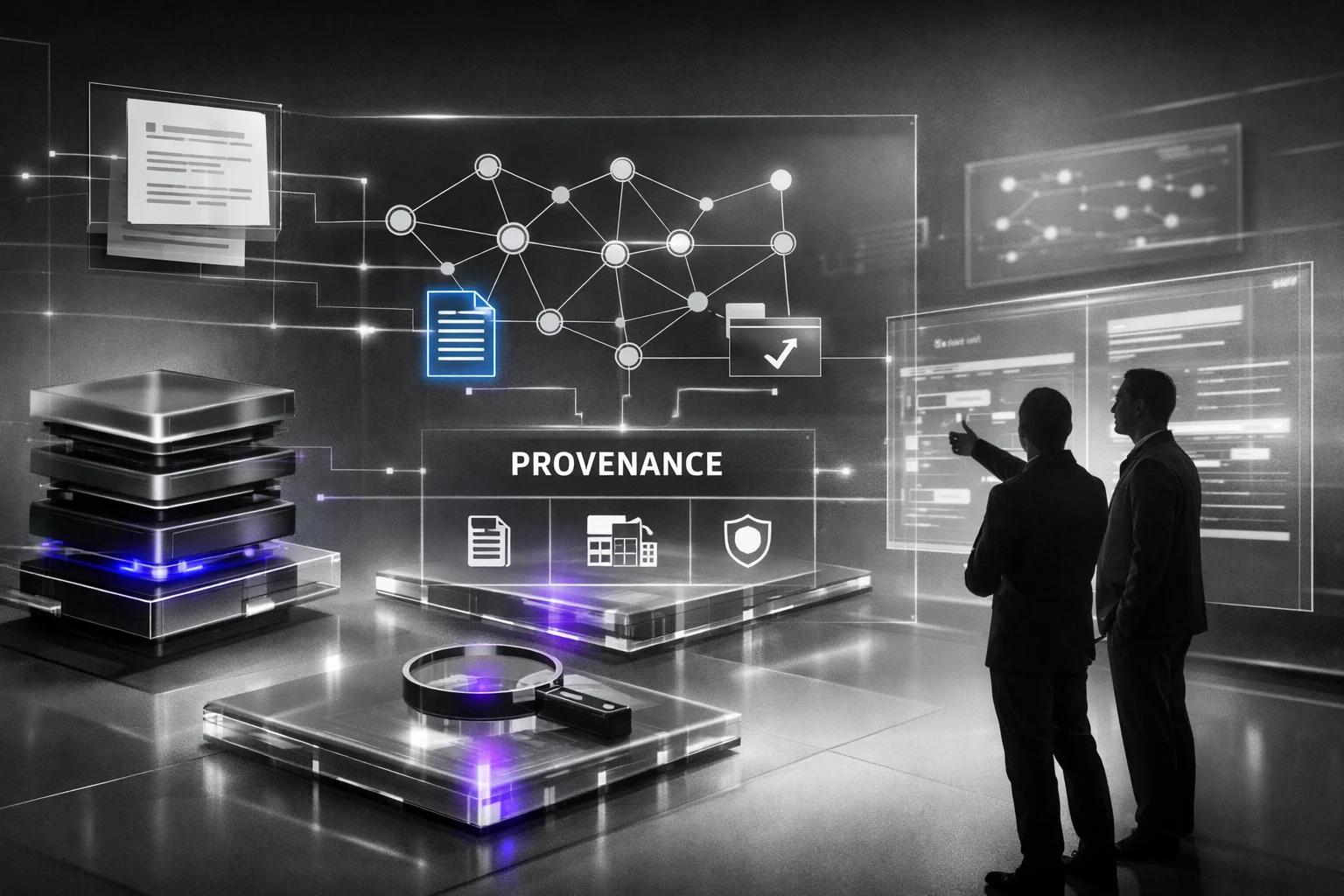
Most enterprise RAG demos are trust theater. They look smart, answer fast, and still leave you with no clean way to prove where the answer came from.
That’s the real problem behind RAG knowledge retrieval provenance. If your model can’t show its work, you don’t have a reliable system. You have a polished guessing machine with better UX. I’ll back that up with what AWS, Atlan, peer-reviewed research, and real enterprise RAG practice keep pointing to: source citations, provenance metadata, audit logs, and versioned retrieval paths aren’t nice extras. They’re the difference between something your team can ship and something legal, security, or compliance will stop cold.
What a RAG Knowledge Retrieval System Is
I watched a team ship an internal assistant that answered an HR question with the wrong policy PDF. Not wildly wrong. Worse than that. Plausibly wrong. The bot pulled a 2023 leave policy instead of the revised version approved the prior quarter, and for about half a day everyone thought the answer was legitimate because it sounded polished.
That's how this usually breaks. Not with flames. With confidence.
The pitch beforehand was the same one I've heard since the ChatGPT boom in late 2022: connect your internal docs, add a vector database, wrap it in a clean interface, and you've got enterprise AI. Twenty minutes into the demo, everybody nods. Two weeks later, someone asks where an answer came from, and the room gets very quiet.
Atlan gets the real issue right: a proper RAG system has to trace an output back to the exact documents or data assets used to produce it. I'd argue that's not some nice extra for regulated teams. It's the whole ballgame. "Trust us" isn't governance. "Here's the source" is.
People call this a smarter chatbot. I think that's flat wrong.
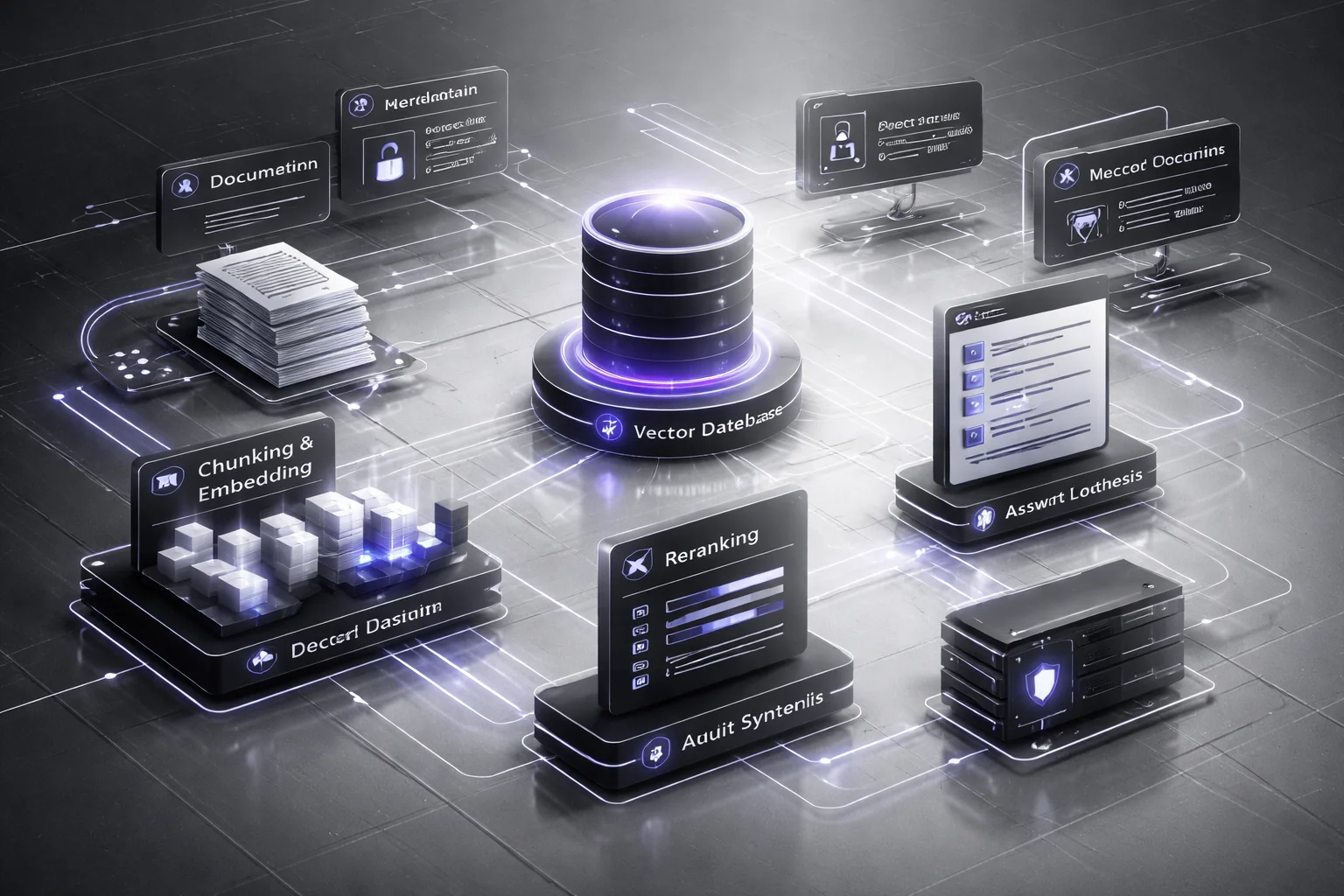
A real retrieval-augmented generation setup is a search-and-answer stack. First it splits documents into chunks. Then an embedding model turns those chunks into vectors. Then a vector database pulls likely matches. Then those results get ranked. Only after that does the model generate an answer from the evidence it was given.
Buried in that sequence is the part that decides whether your system works: retrieval. Not the flashy model switch. Not the screenshot-ready UI. Retrieval.
I've seen teams bounce from GPT to Claude and then to another model entirely, hoping accuracy would jump enough to matter. Sometimes they'd get a small lift. Usually not much. The bigger gains came from uglier work nobody wants to brag about in a launch post: shrinking chunk size from bloated 2,000-word slabs into tighter sections, cleaning metadata fields that were mislabeled, fixing retrieval rules so the system could actually find the source instead of improvising around it.
That's your framework, if you want one.
Start with evidence before eloquence. Check chunking first. Check metadata second. Check ranking third. Check citations fourth. Worry about model swaps after that, not before.
Squirro said it plainly in 2026: provenance-aware retrieval matters because stale knowledge and misinformation create operational and legal risk. That's not theory. If your finance assistant cites an outdated contract clause or your HR bot answers from superseded policy docs, somebody will care fast, and probably in writing.
This is where RAG knowledge retrieval provenance stops sounding like jargon and starts sounding like basic adult supervision. You need RAG traceability. You need knowledge retrieval source citations. You need enough structure that enterprise RAG governance can survive an audit, a compliance review, or just one skeptical person asking, "Where did this answer come from?"
The best analogy I've got is running finance off screenshots of spreadsheets. For a minute, sure, the numbers can look fine. Try verifying anything three months later.
If you're building this properly, treat RAG as retrieval first and generation second. Fix chunking, metadata, ranking, and citations before you obsess over swapping models again. If you want the architecture view, see RAG document retrieval citation architecture. If you can't point to the source, what exactly are you trusting?
Why Provenance Makes RAG Enterprise-Usable
11.5%. That was the Knowledge F1 lift reported in a 2025 Nature Scientific Reports paper on KG-RAG over OpenDialKG, alongside a 4.8% gain in BLEU-4 and 5.5% in ROUGE-L. I think that number matters for a reason people don't talk about enough: better answers usually show up when the system can actually show its work.
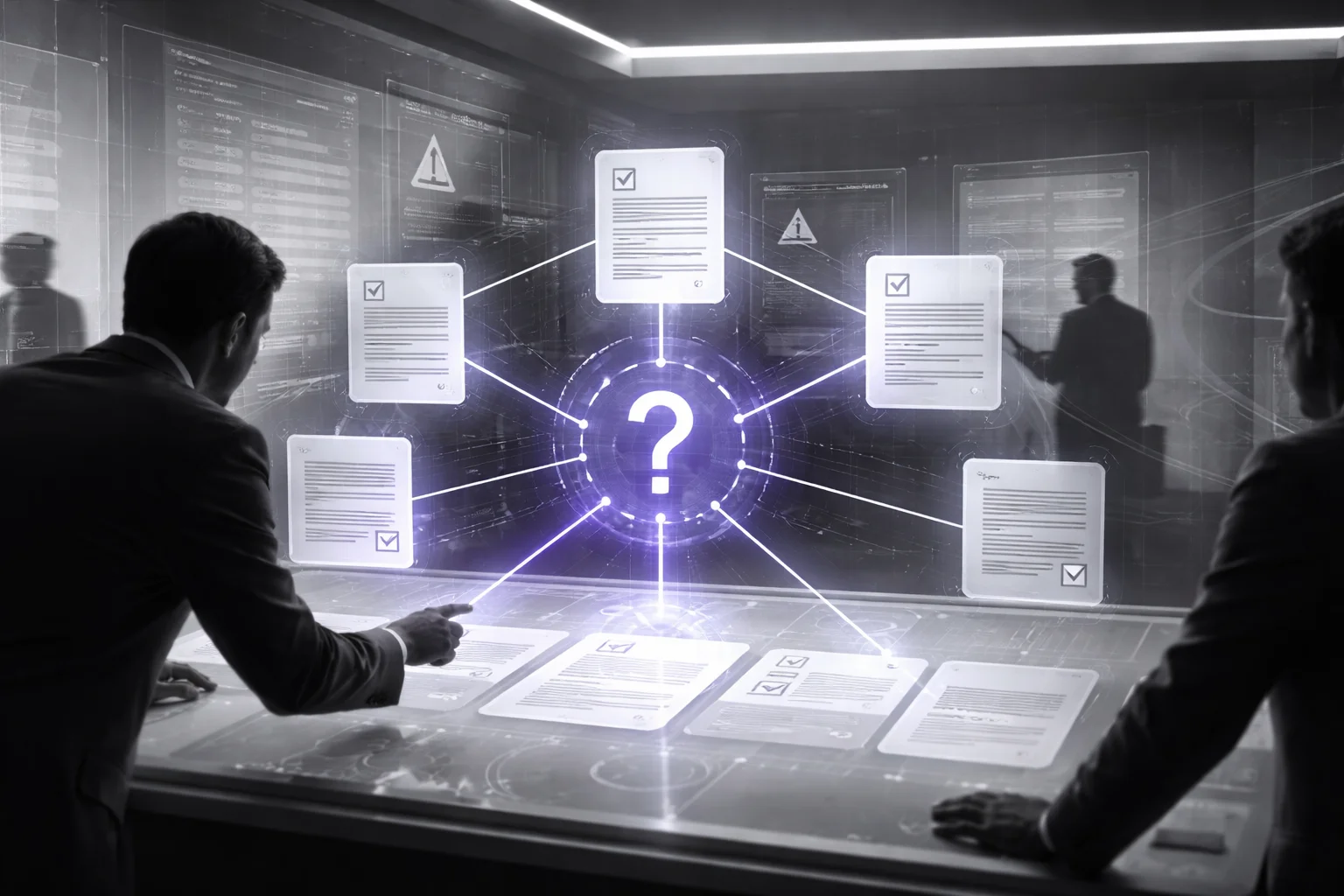
I've watched teams obsess over hallucinations while a much uglier problem sat right in front of them. Not fake answers. Untraceable ones.
A bad answer with receipts? Annoying, but fixable. A polished answer nobody can tie back to a specific document revision is how a pilot looks smart on Monday and starts getting side-eyed by legal two weeks later.
That happened to me. We greenlit a RAG pilot because the outputs looked clean, confident, basically right. Fourteen days later, someone opened the cited policy in SharePoint, found a newer revision, and asked the only question that mattered: why did the system answer from an outdated file?
The model wasn't simply "wrong." That would've been easier. We could confirm retrieval happened. We could see chunks came back from the vector database. What we couldn't explain was why the older chunk beat the newer one, what metadata came with it, whether chunking had split the revised section badly, or whether the 2:00 a.m. reindex job missed a legal edit where two changed lines flipped the meaning of the policy.
That's the trust gap. Demos hide it because demos reward fluency. Real companies don't.
Provenance is the minimum bar for enterprise RAG. If compliance, finance, operations, or legal can't verify an answer, challenge it, and sign off on a decision tied to it, then it's not an enterprise system. It's a demo with better manners.
Atlan makes a fair point here: retrieval-augmented generation keeps knowledge outside model weights, so you can update the knowledge base without retraining. True. Useful too. It's also where the pain starts if your content lives in SharePoint, Confluence, Google Drive, Jira, or some ticketing system that changes every day before lunch.
Your stack has to prove which version it pulled, when it pulled it, and why that passage won retrieval. If it can't, you keep running into the same mess over and over.
- Stale documents: the source exists, but it's old. Legal updates two high-risk paragraphs on Tuesday; your embedding index still reflects last quarter's policy because refresh lagged or failed.
- Hidden retrieval: chunks came back from the vector database, but users can't inspect them. So nobody knows whether retrieval was sensible or weirdly off-target.
- Citation drift: the answer sounds grounded, but the citation points to nearby text, partial context, or a superseded file instead of the exact evidence behind the claim.
I've seen this hit payroll and procurement too, not just flashy chatbot projects. HR asks about leave policy. Finance checks an approval threshold. Procurement wants supplier language from the current contract template. Now imagine defending any of that from "the system probably used the latest version." I've sat in those meetings. Nobody buys it.
Treat provenance as a control layer, not window dressing. Four checks matter more than most teams want to admit: source identity, source version, retrieval path, and answer-to-source alignment.
Source identity means each chunk has a stable ID and metadata someone can use in real life: repository name, document URI, owner, created date, modified date. Source version means every retrieved passage ties back to a specific revision instead of some vague "latest" label that falls apart during review. Retrieval path means logging which query matched which chunks and in what order from your vector database. Answer-to-source alignment means users can inspect whether each claim maps to retrieved evidence instead of trusting nice-looking citations.
This is where enterprise RAG governance, provenance schemas for RAG, and RAG monitoring and refresh stop sounding like architecture-slide filler and start sounding overdue.
The quality argument isn't separate from provenance either. I'd argue it's tangled up with it. Systems with visible structure make fewer mysterious ranking decisions and expose evidence paths instead of burying them. That's part of why graph-backed approaches are worth watching; they make relationships easier to inspect and evidence paths easier to follow in Knowledge Graph Qa.
You don't need perfect provenance on day one. Nobody has that. You do need enough RAG traceability that when somebody challenges an answer at 4:47 p.m. on a Friday—and they will—your team can say exactly what was used, why it was retrieved, which version it came from, and where you'd challenge your own system first if something looks off. Can your stack do that right now?
RAG Architecture for Traceability and Source Control
26%.
That’s the number that stuck with me. A 2025 Medium summary of research on Mem0 said it posted a 26% relative lift on LoCoMo judge scores over OpenAI Memory, and the graph-enhanced version squeezed out about 2% more overall. I like quality gains as much as anyone, but honestly? My first reaction was less “impressive” and more “fine, now show me how the thing got its facts.” Because I’ve sat in rooms where the answer looked correct, the citation looked clean, and the whole system still fell apart under one boring audit question.
It was over a PDF. Seriously. Not some dramatic model meltdown. A team had an assistant answering from the right policy document, yet nobody could prove which version had been ingested, who owned it, what system it came from, how it had been chunked, or why one chunk outranked five others during retrieval. That’s when the cute little “ingest, embed, search, answer” diagram stops looking elegant and starts looking flimsy.
AWS gets the core mechanic right: retrieval-augmented generation works because the model checks an authoritative knowledge base outside its training data before answering. AWS is also right about citations helping users trust the output. I think that’s only half the job. A citation tells you what the model saw. RAG knowledge retrieval provenance tells you why that evidence existed in the system at all, and under what conditions it was allowed to surface.
Most teams skip that part because it feels administrative. Then security asks a routine question. Or legal does. Or internal audit does six weeks after launch, usually at 4:30 p.m., usually with a screenshot nobody wants to explain.
The unglamorous answer is the right one: every response needs its own evidence trail.
Start with ingestion, because that’s where people get lazy fastest. Every file entering the knowledge base should carry a stable document_id, source_uri, system_of_record, owner, classification, access policy, version_id, and an ingested_at timestamp. If the file came from SharePoint, Confluence, Google Drive, GitHub, or Salesforce, name it directly. Don’t flatten all of that into something useless like “PDF uploaded by admin.” I’ve seen that exact label in production. It poisoned traceability before retrieval even started.
Then there’s chunking. People talk about chunking like it’s layout cleanup. It isn’t. It’s records management wearing a technical hat. Each chunk should have its own chunk_id, the parent document_id, byte or token offsets, section heading, page number where available, and a content hash. Keep both raw-text and normalized-text hashes. That way if someone fixes bullets and spacing on page 14, you can separate cosmetic edits from actual policy changes instead of reprocessing half your corpus for no reason.
The main point is buried here on purpose: if you can’t reconstruct one answer end to end, your RAG system isn’t controlled enough for serious use.
The embedding layer needs records too. Store the embedding model name and version, vector dimensions, preprocessing rules, and index build date. If you switch from OpenAI’s text-embedding-3-large later, old vectors shouldn’t magically inherit a new identity. They were created under older assumptions. Pretending otherwise is how teams compare results that were never comparable in the first place.
This is where provenance schemas for RAG stop sounding bureaucratic and start saving money.
- Retrieval event: query text, query timestamp, user or service identity, filters applied, tenant ID
- Search result set: vector database index name, top-k results, similarity scores, lexical scores if hybrid search is used
- Reranking event: reranker model version, pre-rerank order, post-rerank order, confidence scoring output
- Synthesis event: final prompt template version, retrieved chunk IDs included in context window, answer ID, knowledge retrieval source citations shown to user
- Audit record: approval status, human-in-the-loop review notes, retention policy, audit logs location
You also need access control twice. Not once. Twice. First during ingestion so restricted material never lands in an open index because somebody misconfigured a connector at 11 p.m. Then again at query time so retrieval honors permissions before any chunk reaches the model context window. If HR policy appears inside an engineering assistant because filters were sloppy, I’d argue that isn’t a retrieval mistake at all. It’s governance failure with a nicer label.
Mature systems prove themselves in updates. New versions should trigger re-chunking only where content changed materially, re-embedding only for affected chunks, soft retirement of superseded chunks, and an index refresh that preserves old-to-new lineage. That’s how enterprise RAG governance becomes something you can run every week instead of something you promise in architecture slides.
If you want a broader design reference for this kind of setup, Buzzi AI’s Enterprise Rag Solution Knowledge Fabric is worth reading.
What should you do with all this? Label everything at ingestion. Treat chunking like governance work instead of formatting work. Version embeddings honestly. Log retrieval and reranking completely. Enforce permissions before indexing and again before generation. Preserve lineage every time content changes. Do that and you’ll be able to answer two questions instead of one: the user’s question now and the auditor’s question later. If your system can show a citation but can’t explain exactly where it came from, what are you trusting?
Provenance Schemas That Hold Up in Production
91%. That's the number that sticks with me.
A 2025 Medium summary covering research on Mem0 reported p95 latency dropping 91% and token cost falling by more than 90% against full-context baselines. I read that and had the same reaction I usually have to giant performance claims: sure, great, but show me what happens six months later when legal asks why the model said what it said.
That's the real test. Not whether your citation chip looks clean in the UI. Not whether somebody added a tidy little badge that says “Source: doc_47.” I've seen teams burn two full sprints on hover states, expandable evidence drawers, color rules, all the shiny stuff, and still have no usable record of what the system actually saw, where it came from, what permissions applied, or the exact moment it was retrieved.
You don't feel that problem on launch day. You feel it after a policy dispute. Or an internal audit. Or at 8:12 a.m. when an executive forwards a screenshot with “Can we verify this?” in the subject line. Then “it came from doc_47” isn't provenance. It's cover for the fact that nobody captured enough.
A PMC peer-reviewed regulatory study made one part clear: RAG output provenance can be traced back to source documents, and that improves security and trust. True. I think people hear that and stop too early. A source link helps. It doesn't hold up under pressure.
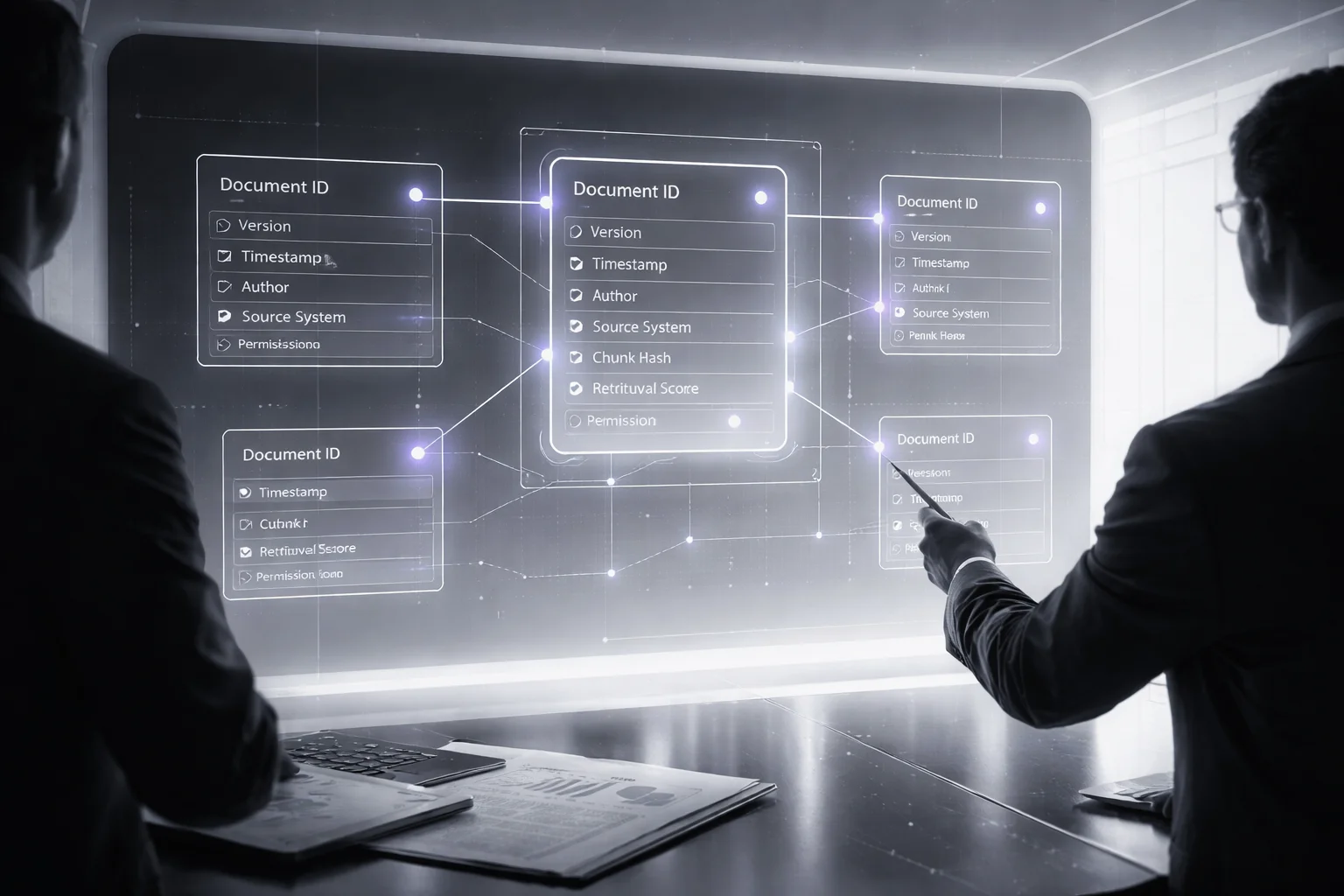
The split that matters isn't simple versus complex. It's shallow versus durable. Shallow provenance says the answer used document 47. Durable provenance says it used document_id 47, version 12, authored by legal_ops, pulled from SharePoint, chunk hash 8f3..., retrieved at 2026-02-14T09:21:11Z, scored 0.83 after reranking, and only inside the finance-eu permission scope. That's not extra metadata for metadata's sake. That's the difference between trust now and proof later.
If your schema doesn't have three layers, it'll go soft fast: source, chunk, retrieval event.
- Source record: document_id, version_id, title, author, source_system, source_uri, created_at, updated_at, approval status
- Chunk record: chunk_id, parent document_id, token offsets, page or section reference, chunk_hash, normalized_text_hash, document chunking policy version
- Retrieval record: answer_id, query_id, retrieval timestamp, embedding model version, vector database index name, retrieval score, rerank score if used, permission_scope applied
The fields people skip are usually the ones that bite them later: citation_span in the final answer and content_snapshot_ref for the exact text shown to the model. Leave those out and your knowledge retrieval source citations start drifting the minute somebody edits a SharePoint file, replaces something in Google Drive, or re-uploads a contract from Legal while insisting they “just fixed formatting.” I've watched a one-line wording change turn a clean-looking citation into nonsense three weeks later.
I’d keep provenance separate from generated answers. Linked tightly, yes. Stored together forever in one messy blob? No. Put answers in your application store. Put evidence records in append-only audit storage with retention rules compliance can actually use without filing a ticket and waiting three days for engineering to export CSVs.
I prefer that split because the alternative turns into sludge. Keep hot metadata in the serving database so the citation UI stays fast. Push immutable evidence into audit logs or an event store for enterprise RAG governance. Using one system for both is like using Slack as your contract repository. Feels fine for a month. Then someone needs the exact approved February version in August and you're knee-deep in chaos.
This isn't only about audits either. It changes retrieval quality before anything breaks. Better evidence storage sharpens filtering before generation starts. Less junk gets retrieved. Less money gets burned pretending recall problems are prompt problems. That's why good provenance schemas for RAG also make RAG monitoring and refresh less painful; you can actually tell what changed, when it changed, and what should be re-indexed instead of guessing.
If you want a concrete example of this structure in practice, Buzzi AI's Enterprise Rag Solution Knowledge Fabric is worth your time.
Your move is pretty simple: audit your schema like someone hostile will need it later. Check whether you can reconstruct an answer from February with exact source versioning, chunk identity, permission scope, retrieval timing, and stored content snapshots. If you can't do that today, are your citations actually evidence—or just decoration?
UI Patterns for Citations, Confidence, and Review
Everybody says the same thing: just add citations. Maybe toss in a confidence badge. Problem solved. I don't buy it.

I watched a sales rep prove why. In a demo, she asked a basic question, got a slick answer, clicked a tiny citation marker, and landed in a bloated PDF with no highlighted sentence, no date, no document owner, nothing she could use. Three seconds. That's how long it took before she said, “Yeah, I’m not using that in front of a customer.”
That's the part teams miss. Trust isn't created by attaching footnotes to generated text. Trust is whether a business user can verify an answer in about five seconds without feeling like they just opened a filing cabinet in the dark.
What makes that happen while still giving power users enough depth to tear the whole thing apart?
The old thinking is too narrow. Teams obsess over backend retrieval quality — vector database tuning, chunking strategy, embedding model selection, which chunk ranked first from the knowledge base — then hand people a review experience that feels unfinished. I think that's backwards.
Because this screen has to do two jobs at once. Sales and ops want fast answers with proof they can scan instantly. Legal, security, and analysts want the guts: what the retriever returned, which chunk won, how document chunking shaped the result, whether the embedding model pulled the right passage. Same answer box. Two audiences. Usually one of them gets ignored.
The missing piece is smaller than most teams expect: inline citations in the answer, source cards that open beside it, and one-click highlighting from claim to source. Not flashy. Just usable.
I'd ship it like this.
- Inline citations: Put numbered or named citations right after factual claims. Click once and open the exact supporting span. Don't dump someone onto page 48 of a PDF and expect confidence to magically appear.
- Expandable source cards: Show title, version, owner, updated date, source system, and retrieval score right away. If freshness is hidden behind some metadata drawer, almost nobody will check it.
- Answer-to-source highlighting: Hover over a sentence in the answer and light up the matching passage in the source. That's when knowledge retrieval source citations stop being ceremonial and start being testable.
- Confidence labels with plain language: Use “high support,” “partial support,” or “needs review.” Skip fake precision like 87.3% confident. Nobody serious believes that number anyway.
- One-click refresh and report: Let users rerun against the current index or flag a bad citation from the same screen. Good RAG monitoring and refresh starts inside the product, not in some dashboard your team opens every other Friday.
A concrete case makes this obvious. Say an operations manager asks whether a vendor policy changed after a contract update on March 14, 2025. The system answers yes. Fine. Now prove it properly: open the exact clause from the updated policy document, show Legal as the owner, display the version date, and highlight the line that changed. One click. Working-speed trust.
The White Rose ePrints study on art provenance pointed in this direction in 2025. Their prototype let people ask questions naturally while keeping outputs traceable and explainable. That's closer to what business users actually want. Not a forensic lab first. A fast answer they can verify without drama.
The speed angle matters more than most product teams admit out loud. A 2026 Medium summary of research reported newer memory-aware retrieval methods staying under 7,000 retrieval tokens while comparable full-context setups pushed past 25,000 tokens, with scores of 91.6 on LoCoMo and 93.4 on LongMemEval. Smaller evidence sets don't just help performance; they make review sane because you're showing tighter support instead of dumping every vaguely related document into view.
I saw one internal tool at a Fortune 500 company choke on this exact problem — nine citation chips attached to one sentence, six opening stale docs from SharePoint mirrors nobody had cleaned up in months. Technically cited. Practically useless.
If verification lives behind extra clicks, your enterprise RAG governance model is already weaker than you think. For deeper implementation patterns, see RAG document retrieval citation architecture. If your users can't verify an answer faster than they can doubt it, what exactly did those citations fix?
Monitoring, Refresh, and Governance for RAG Systems
Here's the mistake I see over and over: teams treat citations like a health check. I think that's backwards. A citation proves your system found something. It doesn't prove it found the right thing, the current thing, or even the thing that still matches how the business works now. I've watched a team roll out a slick citation side panel, take victory laps in week one, and by month four their assistant was quoting an outdated policy from an index nobody had refreshed since launch. Looked credible. Wasn't.

That's the ugly part of RAG knowledge retrieval provenance. It breaks quietly. A policy gets revised on Tuesday. Product naming shifts in Q3. Legal changes boilerplate across 1,200 documents. Six months later the embedding model that seemed fine starts missing because the writing style, taxonomy, or source mix moved and your controls didn't move with it. If your standard is just “did the answer include citations,” you're admiring the dashboard while the engine's already coughing smoke.
The research lines up with that. The 2025 White Rose ePrints art-provenance study found the system performed better on specific questions and worse on vague or abstract ones. That doesn't feel like some niche academic quirk to me. That's enterprise reality. People ask things like “what changed in our vendor risk posture?” or “are we stricter on third-party onboarding than last quarter?” They don't neatly request section 4.2 of policy X at 9:07 a.m. on a Monday. Ambiguous questions are where weak retrieval hides, and a respectable-looking citation UI won't save you.
The answer isn't prettier UX. It's operations. Recurring checks. Named owners. Thresholds somebody actually has to defend. Tie freshness, retrieval quality, citation coverage, and user feedback into enterprise RAG governance, because if nobody owns those checks they'll rot fast.
- Freshness monitoring: track source age by system of record, last index time, and version gaps between the current file and the retrieved chunk.
- Retrieval quality alerts: flag falling top-k relevance scores, sudden drops after document chunking changes, or abnormal query reformulation rates.
- Citation coverage: measure what percentage of answer claims have visible knowledge retrieval source citations, not just whether one lonely source card showed up somewhere on the screen.
- Feedback loops: route user flags into review queues so bad answers improve filters, metadata, and ranking rules instead of dying inside a support ticket.
- Reindex schedules: set cadence by content volatility. HR policy may need nightly refreshes. Product manuals may be fine weekly.
This is where RAG traceability, provenance schemas for RAG, and RAG monitoring and refresh stop sounding like conference-slide filler. Your vector database should log retrieval drift. Your retrieval-augmented generation pipeline should record which embedding model version produced each index snapshot. Governance owners should approve refresh thresholds the same way they approve access control or retention rules. Same seriousness. Same audit trail.
The market's moving fast whether teams are ready or not. A 2026 The Business Research Company report cited by EIN Presswire said multimodal RAG tooling would grow from $3.32 billion in 2025 to $4.18 billion in 2026. Great. More tools, more dashboards, more vendors promising certainty in three clicks. I'd argue most of that won't help much if it doesn't connect back to evidence lineage and ownership. A chart with no owner is just office decor.
If you want a practical architecture view of that connection, Buzzi AI's Enterprise Rag Solution Knowledge Fabric is a useful reference.
The part people usually miss: strong governance makes the system feel less bureaucratic, not more. Once refresh actually works and citations stay tight, users stop wasting energy asking whether they can trust the assistant at all. They ask better questions instead. Isn't that the whole point?
Case Study: Trust Features Increased Adoption
Hot take: better model output usually isn't what saves an AI assistant.
I’d argue most teams are fixing the wrong problem. They obsess over embeddings, chunk sizes, retrieval tuning, answer polish — all the machinery — while users are sitting there asking a much simpler question: “Can I trust this enough to repeat it out loud?”
That gap showed up hard at a mid-market B2B software company I advised, about 1,200 employees. They already had the classic retrieval-augmented generation setup running across product docs, sales playbooks, policy files, and support runbooks. Documents got chunked on ingest, embeddings went into a vector database, answers were generated from retrieved material. Standard setup. Nothing exotic.
In demos, it looked good. Of course it did. Demos forgive a lot.
Production didn't.
A few stale pricing references reached sales reps. That was enough. Support leads started flagging weird citations to operations. One VP said the assistant felt “smart until you needed to defend it.” That's the whole story right there. Not really a model-quality issue. A trust issue. More specifically, a RAG traceability issue.
People love to pretend users quit because the assistant wasn't smart enough. Sometimes that's true. Here, it wasn't. The assistant needed receipts.
Proof changed everything — not prettier prose, not a friendlier tone, not another round of prompt tinkering. What they actually needed was stronger RAG knowledge retrieval provenance. And no, that doesn't magically rescue bad content. If your pricing page is stale and your internal records are messy, provenance just helps you see the mess faster.
They made three changes, and each one mattered.
They shoved citations into the foreground of the UI so nobody could miss them. Every factual claim opened to the exact source span, plus the version date and content owner on screen. No hand-wavy “internal documentation” label. No guessing which PDF some answer had pulled from at 4:47 p.m. while a rep was trying to close a deal in Salesforce.
They also set up RAG monitoring and refresh based on how often content actually changed. Pricing documents refreshed daily. Policy materials refreshed on approval events. Superseded chunks got retired instead of lingering in retrieval results for another six weeks like expired leftovers in an office fridge.
The third fix was less flashy and probably more important: lightweight provenance schemas for RAG. Every answer logged source document version, chunk ID, retrieval score, index snapshot, and review state for enterprise RAG governance. I think this is where plenty of teams get sloppy. They want accountability right up until someone asks for the trail.
The practical effect was obvious fast. A sales rep in Salesforce checking enterprise discount thresholds could open the answer and see the exact pricing-policy paragraph, updated that morning at 6:00 a.m., owned by RevOps — not some mystery file from last quarter sitting in a forgotten folder. A support lead reviewing Zendesk macros could inspect a refund-policy answer, confirm it came from an approved policy version instead of an outdated runbook chunk, and stop kicking the issue over to operations.
The numbers weren't subtle. Over 90 days, weekly active usage rose 38%. Escalations tied to answer disputes fell 41%. Executive sponsors who'd been pushing for “human review on everything” backed off once they could inspect evidence paths themselves.
The money pouring into this category tells you people know there's demand. A 2030 The Business Research Company report cited by EIN Presswire projected multimodal RAG tooling would hit $10.5 billion. Fine. Great. Spend all you want. Usage still has to be earned one answer at a time.
The structural lesson ran deeper than interface cleanup. A 2025 Nature Scientific Reports paper found that structured knowledge graphs improve interpretability by clearly tracking where knowledge comes from. That's why graph-informed patterns helped this team tighten provenance and review flows; if you want that angle, read Knowledge Graph Qa.
People adopted the assistant because it could prove itself.
Funny part? One bad answer can wreck months of rollout work, but one visible evidence trail can calm down an entire executive team — so why are so many teams still trying to buy trust with just a better model?
Where this leaves us
RAG knowledge retrieval provenance is what turns a decent retrieval-augmented generation demo into a system your business can trust, audit, and keep alive in production.
If you're building or buying a RAG stack, don't stop at answer quality. Check whether every response carries durable provenance metadata, source citations tied to content versioning, and audit logs that survive document refreshes, access control changes, and source control integration. And watch your RAG monitoring and refresh process closely, because stale chunks and broken lineage will quietly wreck RAG traceability long before users file a ticket.
Most people get this wrong by treating provenance as a citation feature bolted onto the UI. The better way to think about it is as core infrastructure for enterprise RAG governance, not decoration.
FAQ: RAG Knowledge Retrieval Needs Provenance
What is a RAG knowledge retrieval system?
A RAG system combines retrieval-augmented generation with an external knowledge base so the model can pull relevant documents before it answers. AWS puts it simply: the model references an authoritative source outside its training data, which is exactly why RAG knowledge retrieval provenance matters in production. Without that retrieval layer, you're asking the model to guess from memory.
How does provenance improve trust in RAG answers?
Provenance gives each answer a chain of evidence, showing which documents, chunks, and versions shaped the response. Atlan notes that every RAG response can be traced back to specific source documents or data assets, which helps compliance, legal, and governance teams verify what happened. Users trust answers more when they can inspect the receipts instead of taking the model's word for it.
What provenance metadata should you store for retrieval results?
Store the fields you'll wish you had during an incident review: document ID, source system, content version, ingestion timestamp, chunk offsets, embedding model version, retrieval score, and access-control context. I’d also keep citation text, index version, and query ID so you can reconstruct exactly why a chunk appeared. That’s the difference between basic logging and real RAG traceability.
Is there a standard provenance schema for RAG systems?
Not really, at least not one standard everyone follows. Most teams end up building provenance schemas for RAG around their stack, usually combining provenance metadata, data lineage fields, audit logs, and content versioning. The trick isn't chasing a perfect schema, it's picking one that survives model swaps, re-indexing, and source control integration.
What governance controls does enterprise RAG need?
Enterprise RAG governance needs access control, auditability, approval workflows, retention rules, and clear ownership for source systems. A 2026 Squirro article warned that stale knowledge and misinformation can create operational and legal risk, which is why governance can't stop at the vector database. You need policies for who can publish content, who can query it, and how exceptions get reviewed.
Which metrics should you monitor for retrieval drift and stale knowledge?
Watch citation coverage, failed retrieval rate, stale-document hit rate, source freshness, confidence scoring trends, and answer-to-source agreement. If provenance quality drops, you'll usually see it first in missing citations, old versions getting retrieved, or a spike in human-in-the-loop review rejects. Good RAG monitoring and refresh practices catch those problems before users do.
How should citations and confidence be shown in a RAG UI?
Show source citations inline and in an expandable panel, with document title, version, date, and the exact supporting passage. Confidence scoring should be visible but not theatrical, because a big green badge can trick users into trusting weak evidence. The best citation UI helps people inspect source attribution fast, especially when the answer mixes multiple chunks.
How can human review workflows use provenance to approve or reject RAG outputs?
Reviewers should see the answer, the retrieved chunks, provenance metadata, and any policy flags in one place. That makes approval less like trying to debug a magic trick and more like checking a paper trail, which isn't a perfect analogy, but it's close. Human-in-the-loop review works best when reviewers can mark bad citations, stale content, or unsupported claims and feed that back into retrieval and refresh rules.