Chatbot for Appointment Booking: Handle Complexity
Most appointment bots fail because they’re too polite to say “no.” They collect a date, grab a time, and then fall apart the second your actual business rules...
Most appointment bots fail because they’re too polite to say “no.” They collect a date, grab a time, and then fall apart the second your actual business rules show up, double bookings, staff constraints, time zones, reschedules, all of it. I’ve seen teams ship an appointment booking chatbot that looked great in a demo and caused chaos a week later.
The good news is the mess is predictable. According to SchedulingKit, 28% of chatbot use cases involve appointment or meeting scheduling, and businesses see a 35% lift in booking conversion with scheduling chatbots. But that only happens if your bot can handle complexity instead of pretending it doesn’t exist. In this guide, I’ll walk through the six parts that separate a useful booking bot from an expensive calendar-shaped problem.
What a Chatbot for Appointment Booking Really Is
Everybody says the same thing about appointment booking bots: they're a faster front desk. Drop one on your site, connect a calendar, ask for a name and a time, done. Clean demo. Five clicks. Everybody's happy.
That's the sales version. Real life is messier, and I'd argue that old framing is the reason so many of these bots fall apart the second actual customers touch them.
A lot of so-called booking chatbots aren't really chatbots at all. They're forms dressed up like conversations. You don't notice during the polished walkthrough. You notice on Tuesday at 8:17 a.m. when one provider's schedule changes, a patient asks to switch from in-person to virtual, and somebody else grabs the same slot because the system wasn't really managing the conversation or the calendar.
I saw a team ship one of these years ago. Looked great for about 48 hours. Then came the normal human stuff: “Can I do Thursday after 3?” “Only virtual.” “Actually make it next week.” “I need Dr. Singh.” That's where the costume comes off.
Booking isn't just data capture. That's the missing piece people keep skipping. It's intent detection, dialog management, slot filling, and live availability lookup happening at the same time while the user changes their mind halfway through typing.
If the system can't figure out what someone means, check current availability, apply business rules, and complete confirmation without creating cleanup work for staff later, it isn't an automated booking assistant. It's a polite traffic jam.
The demand is real, which makes bad implementations even more annoying. SchedulingKit says 73% of consumers would use a chatbot to book an appointment. People clearly want this option. Marketing LTB reports that 91% of messages handled by modern chatbots use NLP, which tells you something obvious: users expect to type like people, not fill out rigid little boxes like it's 2014.
Healthcare figured this out early because healthcare scheduling punishes lazy product decisions fast. Marketing LTB cites an industry roundup showing 68% of healthcare organizations use chatbots for appointment-related tasks. Of course they do. Try handling provider matching, visit-type restrictions, follow-up timing rules, insurance prompts, and calendars that change without warning because a doctor got pulled into something urgent.
That's why I think teams should build for ugly cases first, not pretty screens first. Start with intent branches. What happens if the request is vague? What if availability comes back empty? What if the person wants virtual only? What if they switch providers in the middle? What if a new booking suddenly turns into a reschedule flow and your bot keeps pretending nothing changed?
Tone can wait. Button color can wait too. Nice copy won't rescue broken scheduling logic. A cheerful interface can still create three manual correction tickets before lunch.
If you're trying to decide between building this properly and stitching together plugins because it looks cheaper upfront, read Chatbot Development Services Vs Platforms. That decision has a way of showing up later in places teams never budgeted for.
The strange part is that these systems usually don't fail on the easy question. They fail on coordination. Not “Where do you want to go?” More like: how did two people end up landing on the same runway?
Why Simple Booking Chatbots Create Scheduling Chaos
Everyone says the same thing: if the bot books more appointments, it's working. Clean story. Easy dashboard. A few green arrows on conversion and suddenly people call it automation. I'd argue that's the oldest trap in this category. Getting someone to click a time slot isn't the hard part. Keeping the schedule accurate after real humans start changing their minds is where the whole thing either holds up or breaks.

The conversion argument isn't fake. SchedulingKit says scheduling chatbots can increase booking conversion rates by 35% in 2026. Sure. Put three open times in chat instead of forcing someone to sit on hold for eight minutes and you'll usually get more completed bookings. That's obvious. What's not obvious—until staff starts complaining—is that a bot can win that first interaction and still dump the messiest 40% of scheduling back onto humans: provider changes, duplicate visits, reschedules after outside testing gets moved, switching from in-person to virtual.
That's the missing piece. Not intent detection. Not a friendly tone. Conflict resolution.
NCBI Bookshelf points out that chatbots can push minor issues into automated flows so in-person appointments stay open for urgent or complex cases. That's useful. Genuinely useful. But only if the system can survive the second sentence. The first sentence is easy: “I'd like to book.” The second sentence is where weak systems confess what they are: “Actually, not Dr. Patel—who does telehealth on Wednesdays?” “I already booked June 12, but my MRI got pushed.” That's not some exotic edge case. That's normal clinic traffic before 9:17 a.m.
People are harder to fool now because they've used enough bots to know what decent feels like. Exploding Topics reports that 88% of people had at least one chatbot conversation in the past year. They notice stale availability. They notice time-zone mistakes when “next Tuesday at 3” means one thing in Chicago and another thing from an airport Wi-Fi login in Denver. They notice when a cancellation doesn't release inventory right away. Staff notices too, usually while untangling a double-booking and apologizing for something software caused.
I've seen versions of this that look small until they aren't. A clinic bot says “confirmed” at 2:01 p.m. The EHR sync lags two minutes. Another patient books that same slot through the portal at 2:02 p.m. Now you've got two people headed toward one specialist consult, and maybe that consult took six weeks to get in the first place. Add a text reminder sent at 8:00 a.m. the next morning to both patients and now everyone knows there's a problem except the system that created it.
Healthcare makes this especially brutal because mistakes cost more there than they do in, say, salon booking or restaurant reservations. Marketing LTB reports that 68% of healthcare organizations use chatbots for appointment tasks in 2025. Of course they do. Admin teams are stretched thin and appointment volume is relentless. The catch is that healthcare exposes every lazy assumption baked into a simple booking assistant: provider-specific rules, visit-type restrictions, duplicate appointments, referral requirements, insurance checks, telehealth eligibility, urgent-vs-routine triage.
A bot that only handles first-time visits under perfect conditions isn't really handling scheduling. It's handling demos.
The part most teams miss is timing across channels. Web chat says a slot is open. SMS offers it too. The patient portal still has cached availability from 90 seconds ago. A staff member manually moved another patient into that hour from an internal calendar view nobody thought to sync properly during implementation. Now you've got ghost conflicts—the kind that don't show up in launch screenshots but absolutely show up in support tickets and no-show investigations.
Build the ugly stuff first: reschedules, cancellations, provider swaps, duplicate detection, inventory release timing, channel sync across web chat, SMS, portal bookings, and staff calendars. Don't bolt it on after launch because somebody hit a conversion KPI in week one and called the project done.
If you want something built for actual operational mess instead of demo-day fantasy, look at Ai Chatbot Virtual Assistant Development.
The weird part is how often bad booking bots get praised early. Conversion goes up first. The damage arrives later—support tickets, angry no-shows, hidden staff workarounds, duplicate bookings quietly fixed by humans who never get mentioned in the quarterly update.
Common Appointment Booking Complexity Patterns
Why do booking bots seem fine in the demo and then fall apart on a random Thursday at 4:47 p.m.?
You can sit in a polished walkthrough, watch the bot greet someone, offer a slot, confirm it, and everyone in the room nods like the problem’s solved. I’ve seen that movie. Tuesday afternoon, clean test data, no staff sick calls, no one booking by phone at the same time, no customer texting from an airport Wi-Fi connection while crossing time zones.
Then the team starts polishing the wrong things. Tone. Typing bubbles. Whether the assistant sounds “friendly but efficient.” Meanwhile a real customer says “tomorrow at 3,” another person grabs that exact slot by phone twelve seconds earlier, and support gets handed a mess nobody bothered to model because it looked too annoying.
Footnotes do that. They turn into your week.
The answer is this: booking bots usually break at coordination points. Not the greeting. Not the easy path. The handoff moments where calendar state, staff rules, time interpretation, and inventory all have to agree at once. And yes, speed makes it worse.
SchedulingKit says chatbots respond 4x faster than human-only support in 2026. Great stat. I think people read that number and get reckless. A fast wrong answer isn’t progress. It just creates a scheduling error sooner.
Calendar conflicts and stale availability
The oldest failure in the book is still alive because teams keep checking availability too early. The bot looks once during discovery, keeps chatting for another minute, then confirms using old information instead of live inventory. That’s how two people walk away thinking they own Tuesday at 2:30.
I watched this happen on a specialist calendar where everything looked perfect in logs until you lined up the timestamps. The bot saw an open slot. A staff member booked that same slot by phone before the conversation finished. The customer got a confirmation built on stale data. On paper? Clean enough. In production? Total nonsense.
The fix is boring, which is probably why people skip it: check live inventory again at final confirmation. Right there. Not thirty seconds earlier. Not after intent capture. At confirmation.
Time zone mismatches
“Tomorrow at 3” sounds simple until you ask one ugly question: whose tomorrow?
A customer from New York booking a telehealth visit while staying in Denver doesn’t mean what your system thinks it means unless you read locale, account settings, device signals, and explicit time references before you lock anything in. Same problem with a London client trying to schedule with a U.S. team after midnight local time. Same sentence. Different actual hour.
People brush this off because it feels tiny compared with payment failures or outage alerts. I’d argue that’s backward. One bad time assumption creates a no-show, and trust drops fast after that.
Staff unavailability and rule-based routing
The request usually isn’t “book me Tuesday.” That’s the toy version of scheduling.
The real request is closer to: “Book me with Priya, unless she’s out, then anyone senior enough for renewals.” Now you’re not just syncing calendars. You’re matching intent to policy.
If Priya can handle renewals but not first-time consultations, if only senior staff are allowed to take regulated account reviews, if one office accepts walk-ins but another doesn’t, then availability alone tells you almost nothing useful. You need routing rules tied to business constraints or the bot books the wrong human into the wrong work.
NCBI Bookshelf notes that chatbots can help with appointment scheduling and automated reminders that cut admin burden and missed appointments. Sure. But reminders won’t rescue you after the wrong person was assigned to the wrong visit type in the first place.
Reschedules, partial confirmations, and broken handoffs
This is where simple tools start sweating.
Rescheduling sounds like “booking again,” but it isn’t. The bot has to release old inventory, secure new inventory, update confirmations across channels, and keep context intact if something breaks halfway through.
If it drops the old appointment before locking the new one, you’ve created loss. If it locks the new one without releasing the old one, you’ve blocked capacity. If SMS says one thing and email says another, now the customer has screenshots proving your system contradicted itself.
Marketing LTB reported that 91% of businesses with more than 50 employees were already using chatbots somewhere in the customer journey in 2025. Exploding Topics says another 55% plan to add one for customer service improvement. Adoption isn’t really the headline now. Pressure is.
If you’re looking at this from an architecture angle instead of a marketing slide deck, Ai Chatbot Virtual Assistant Development is a reasonable place to start.
So what matters more: a bot that sounds polished for thirty seconds, or one that can survive stale inventory, conflicting channels, time zone ambiguity, policy-based routing, and Priya calling in sick five minutes before open?
How to Design Conflict Resolution in Booking Chatbots
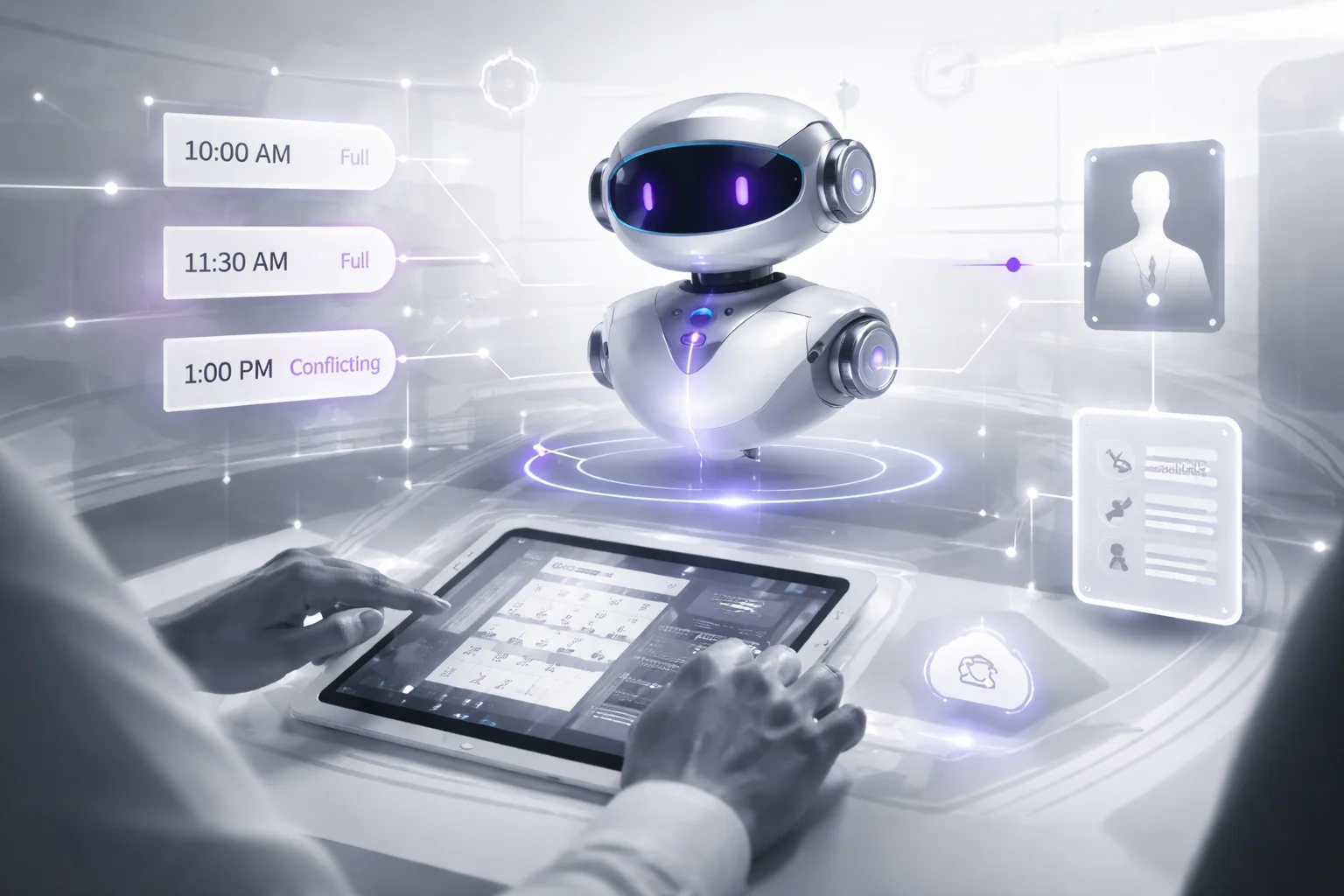
Friday, 4:57 p.m. I've seen this movie. A patient grabs what looks like the last Monday morning follow-up with Maria. The chatbot confirms it. The front desk groans. That slot was blocked for charting, the calendar sync lagged a few seconds, and now somebody's spending ten minutes undoing a promise the bot had no business making.
That's the stuff people bury under pretty automation numbers. 68% of chatbot interactions are resolved without human escalation. Sure. SchedulingKit says that. I don't even doubt the stat. I just think it's a little generous if "resolved" includes bad bookings that get cleaned up by a receptionist at 5:03 p.m.
The easy requests aren't the test. Never were. A booking bot earns its keep in the ugly cases: two people chasing the same slot, fuzzy visit types, provider preferences that don't quite match, timing rules, virtual versus in-person restrictions. That's where the cheerful copy stops mattering and the logic underneath either holds or snaps.
I'd argue most teams get this backward. They polish the conversation first and treat scheduling rules like plumbing. Bad call.
Check availability twice, not once
This is where plenty of bots fall apart. They verify a slot during discovery, show it to the user, and assume they're done. They're not. You need one validation when you present options and another at the exact moment of confirmation. No shortcuts.
MGMA has pointed out that a well-integrated bot can verify real-time availability, book the appointment, and write details into the EHR while the patient is still chatting. That's the bar. If your confirmation message fires before final calendar validation passes, you're not automating scheduling. You're automating rework.
Stop treating all open slots like they're interchangeable
If someone asks for "the soonest virtual follow-up with Maria," don't dump ten random openings on the screen and call it helpful. Rank them. Provider match matters. Visit type matters. Urgency matters. Buffer windows matter. Channel preference matters too.
A decent scheduling chatbot should score those options and surface the strongest matches first instead of acting like every open square on a calendar means the same thing. That's slot filling with judgment, not just retrieval.
If a slot disappears, keep moving
The worst response here is the lazy one: "That time is unavailable." Great. Now what? Make them restart? Watch them leave?
Give them three ranked alternatives right away. Offer nearby dates. If they already have an appointment scheduled, send them down an appointment rescheduling bot path if shifting that visit solves the conflict cleanly. Good dialog management keeps momentum alive. Bad dialog management turns one failed check into abandonment.
I watched a clinic lose patients over exactly this kind of dead end in early 2024—nothing dramatic, just a slow drip of people who gave up after one unavailable message and booked elsewhere by phone or through Zocdoc ten minutes later.
Know when to hand off—and send context with it
Sometimes the bot's confidence drops for a real reason. Intent detection missed. Calendar API timed out. Business rules collided in a way your flow didn't expect. That's when pretending gets expensive.
Hand off fast to a human and include receipts: user details, selected slot, failed validation reason, transcript summary. Don't trap people in an apology loop. Don't make them explain everything again to a staff member who should've had the full picture already. Continuity beats politeness here every single time.
This won't stay hidden much longer either. Adoption is moving fast enough that weak booking logic is going to get exposed in public, over and over again. Marketing LTB reports that 64% of small businesses plan to adopt a chatbot by 2026. SchedulingKit says 33% of service businesses already use chatbots for appointment booking.
So no, I wouldn't start with a charming slot picker and hope conflict handling sorts itself out later. Build the validation logic first. Wrap the conversation around that after.
If you're sorting out what should live in custom logic versus platform setup, Chatbot Development Services Vs Platforms is worth reading.
Your bot can sound warm all day long. If it can't survive a contested timeslot at 4:57 p.m., what did it actually automate?
Reschedule Management and Confirmation Flows That Work
People love to say rescheduling is basically booking with one extra click. Sounds clean. Sounds efficient. Sounds like something that works great in a slide deck and starts breaking the minute a real person texts at 9:30 p.m. asking to move Tuesday at 2:00 to Thursday at 4:15.
That idea's missing the hard part.
A new booking starts from nothing. A reschedule walks in carrying baggage: the original appointment, reminders already sent, promises already made, channel history, and two or three systems that don't always update in the same order. I'd argue that's the whole job. Not finding a slot. Keeping the truth intact while the slot changes.
I've seen the sloppy version more than once. User asks to move an appointment. The bot launches what is basically a fresh booking flow in Calendly or the clinic scheduler, grabs a new time, then circles back and tries to clean up the old record after the fact. That's how duplicate holds happen. That's how staff open the dashboard and see two live appointments for one person. That's how somebody gets a confirmation for the wrong time and replies in all caps.
The sneaky failure usually sits right in the middle: context gets dropped during the handoff. The better flow keeps hold of who the user is, what was already booked, which channel sent the reminder, and what they actually mean right now. Rescheduling isn't canceling. Canceling isn't confirming. If your system tosses “change,” “cancel,” and “confirm” into one intent bucket, don't act surprised when cleanup work piles up for days.
These paths need different logic. A cancellation should release inventory immediately. An appointment rescheduling bot should lock the new slot before letting go of the old one. An appointment confirmation flow should verify details again before firing off SMS or email across channels. Treat them like close enough cousins and you'll pay for it later in slot filling, availability lookup, reminder handling, and record updates.
Everybody quotes booking stats because they're easy to brag about. According to SchedulingKit, organizations see a 42% higher after-hours booking rate after launching a scheduling chatbot. Fine. Useful even. Incomplete too, because that number means a lot less if people still can't change or confirm those appointments after hours and end up calling staff first thing in the morning anyway.
The same source reports a 25% drop in scheduling-related support tickets after chatbot implementation. I don't think that usually comes from flashy first-touch automation. It comes from full flows that handle the annoying middle parts nobody wants to design.
MGMA has the better scorecard: no-show rate, appointment conversion, scheduling volume, call deflection, patient satisfaction, staff efficiency, and same-day or urgent fulfillment. That's closer to reality. Success isn't “the bot booked something.” Success is continuity. Reminders still make sense after a change. Open slots actually reopen. Availability stays honest. Records don't split into two competing versions of what happened.
Marketing LTB says 78% of global enterprises use AI chatbots for at least one internal workflow. Sure. Scheduling stops feeling internal real fast when a customer receives two separate “confirmed” messages for two different times within 60 seconds. People will forgive a bot that says it needs help. They won't forgive one that's confidently wrong.
If you're building this from scratch or trying to figure out how much control you need over state and channel logic, Ai Chatbot Virtual Assistant Development is worth a look.
So what is your bot really doing when someone asks for a change—managing it, or quietly starting over and hoping nobody catches the mess?
Building a Scenario-Complete Appointment Chatbot
I saw this go sideways on a Tuesday at 4:47 p.m. A patient wanted one small change: move a 3 p.m. appointment to the next day, keep the same provider, switch to virtual if the in-person slots were gone. Ordinary request. The bot looked competent right up until it wasn't.
It canceled the original appointment too early. Then it failed to lock the replacement. Then it sent two confirmation emails anyway, which is almost funny until you remember there was now no appointment on the calendar at all and staff had to untangle the mess by hand before close.
That's the trap. People clap for the 40-second demo where the bot books a clean slot and says all the right things. I don't buy that as proof of anything. If it falls apart on a basic reschedule chain, you haven't built a scheduling assistant. You've built an operations risk with a chat window.
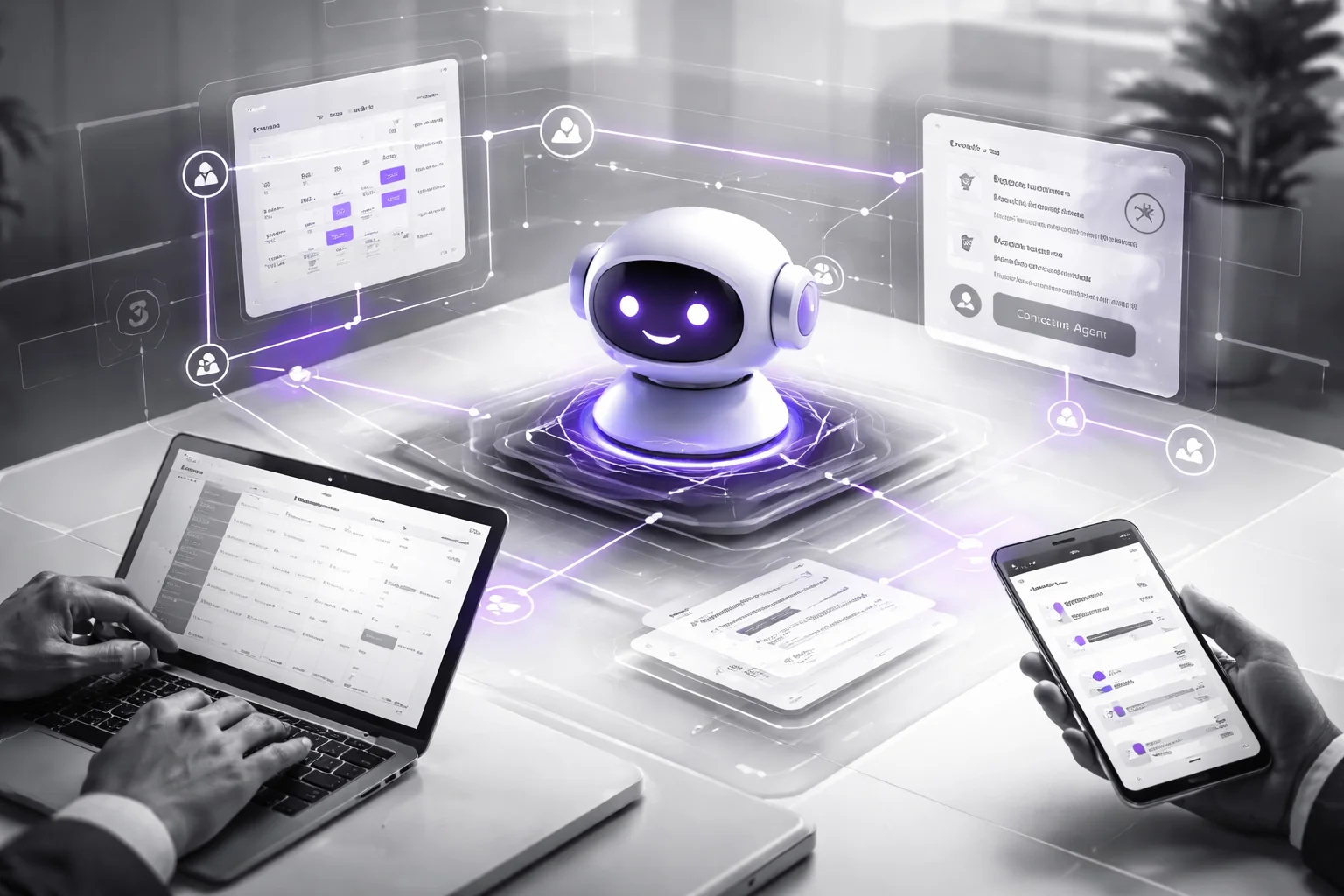
The middle of this whole thing isn't language. It's state. It's rules. It's live system coordination. I'd argue teams miss that because conversation is the flashy part, but the real machine underneath is a rules engine wired into calendars, booking tools, CRMs, EHRs, and whatever else actually controls availability.
Which means fake-live data is useless the second people start making real requests. Availability has to be checked twice: once while the user is picking and again when they're committing. Google Calendar, Microsoft 365, the booking engine itself — direct connections, not screenshots pretending to be inventory. If you don't do that, you're offering stale slots like they're still for sale. SchedulingKit says 28% of chatbot use cases now involve appointment or meeting scheduling. That's not some cute side feature anymore. That's front-desk infrastructure.
People also don't talk in neat little flowchart labels, which is where a lot of bots start sweating. They say things like “push my Thursday thing back,” “can I see someone sooner,” or “is there anything after 5 with Dana?” Your intent detection has to separate new booking from cancellation from confirmation from rescheduling well enough to send the request down the right branch without guessing wrong. SchedulingKit reported 91% accuracy for AI chatbots understanding customer intent in 2026. Fine. The pain lives in the other 9%, and that's exactly where users combine requests, rephrase three times, switch channels, or stack constraints into one sentence.
Here's the framework I'd use before launch:
First, map failure before success. Not later. First. Write down what happens if the slot disappears during checkout, if the provider doesn't match, if an eligibility rule blocks booking, if a time zone gets read wrong, if an API call hangs for six seconds and returns half a payload.
Second, decide the next move for every failure. One clarifying question? Ranked alternatives? Human review? Retry and hold state? Pick it in advance. Don't make your bot improvise policy under pressure.
Third, treat live data like live ammo. Check availability at selection and at commit. Keep state across chained actions so cancel-and-rebook doesn't become cancel-and-pray.
Fourth, set handoff rules before customers find them for you. Low confidence score. Conflicting business rules. Repeated user rephrasing. Unstable slot filling. Done. If somebody asks twice in two different ways and the bot is still guessing, stop making it perform confidence theater and hand it off.
Human backup isn't optional here either. Zoom has reported that modern AI-first chatbots can adapt to more complex requests, and customers still want escalation when things get weird. Of course they do. I once watched support volume spike over what looked like a tiny edge case because nobody had defined who takes over after the second failed interpretation; twelve missed callbacks later, it wasn't a tiny edge case anymore.
Buzzi.ai's view makes sense to me: build for scenario completeness first, make it pretty later. If you need architecture for that instead of a toy flow with polished buttons, see Ai Chatbot Virtual Assistant Development. Marketing LTB says chatbot adoption has grown 4.7x since 2020. Users aren't getting more forgiving as that number climbs; they're getting faster at spotting brittle automation.
So here's the only test I care about: after the first complication shows up right before close, does your bot still work?
FAQ: Chatbot for Appointment Booking
What is an appointment booking chatbot?
An appointment booking chatbot is a conversational assistant that helps users find, book, confirm, reschedule, or cancel appointments without waiting for staff. A good one does more than collect a date and time. It uses intent detection, slot filling, and business rules to guide people through a complete booking flow.
How does an appointment booking chatbot work with calendars?
It connects to calendar systems like Google Calendar, Microsoft 365, or a scheduling platform through calendar integration and availability lookup. The bot checks open slots in real time, applies booking rules, and writes confirmed appointments back to the system. If that sync is delayed or partial, you get the digital version of two people showing up for one haircut.
Why do simple booking chatbots create scheduling chaos?
Because simple bots only capture preferences, they don't handle dialog management, conflict detection, or edge cases. They often ignore buffers, staff availability, appointment type rules, and time zone handling. It's kind of like trying to run an airport with a sticky note, which isn't a perfect analogy, but you get the problem.
How can a chatbot resolve scheduling conflicts?
A scheduling chatbot should check real-time availability before every final action, not just at the start of the conversation. It also needs conflict resolution rules for overlaps, resource limits, provider matching, and blackout windows. When no valid slot exists, the bot should offer alternatives, waitlist options, or a handoff to a human agent.
What’s the best way to handle rescheduling in a chatbot?
An appointment rescheduling bot should first verify the existing booking, then release or hold the original slot carefully while checking new availability. The safest pattern is confirm identity, show valid alternatives, lock the new slot, update records, then send a fresh confirmation message. If you skip that order, you'll create ghost bookings and angry customers fast.
Can an appointment booking chatbot send confirmations automatically?
Yes, and it should. An appointment confirmation flow usually includes the date, time, location or meeting link, provider name, cancellation policy, and reminder timing through SMS or email. According to NCBI Bookshelf, chatbots can support automated patient reminders, which can help reduce missed appointments.
Does an appointment booking chatbot support time zones and recurring appointments?
It can, but only if you design for it on purpose. Time zone handling should convert times based on the user, staff, and service location, then show the final booked time clearly before confirmation. Recurring appointments need extra business rules for cadence, exceptions, holiday conflicts, and partial-series changes.
How do you prevent double-booking in an appointment booking chatbot?
You prevent double-booking by combining real-time availability lookup with temporary slot locking and final write-back confirmation. The bot should recheck availability right before committing the appointment, because another channel may have taken the slot seconds earlier. MGMA notes that well-integrated chatbots can check real-time availability and write appointment details directly into the system while the user is still in the chat.
What should an appointment confirmation flow include?
A solid appointment confirmation flow includes the exact service, date, time, time zone, location, provider, prep instructions, and links to reschedule or cancel. It should also send confirmation messages and reminders through the user's preferred channel. That sounds basic, but leaving out one field, usually the time zone or location, is how support teams inherit a mess.
How do you design fallback and escalation paths when the chatbot can’t book?
Start by defining fallback handling for unclear intent, unavailable slots, failed integrations, and rule conflicts. Then give the bot a clean handoff to human agent flow with chat transcript, captured customer data, and the exact failure reason. Customers want speed, but they also want an exit when automation hits a wall.