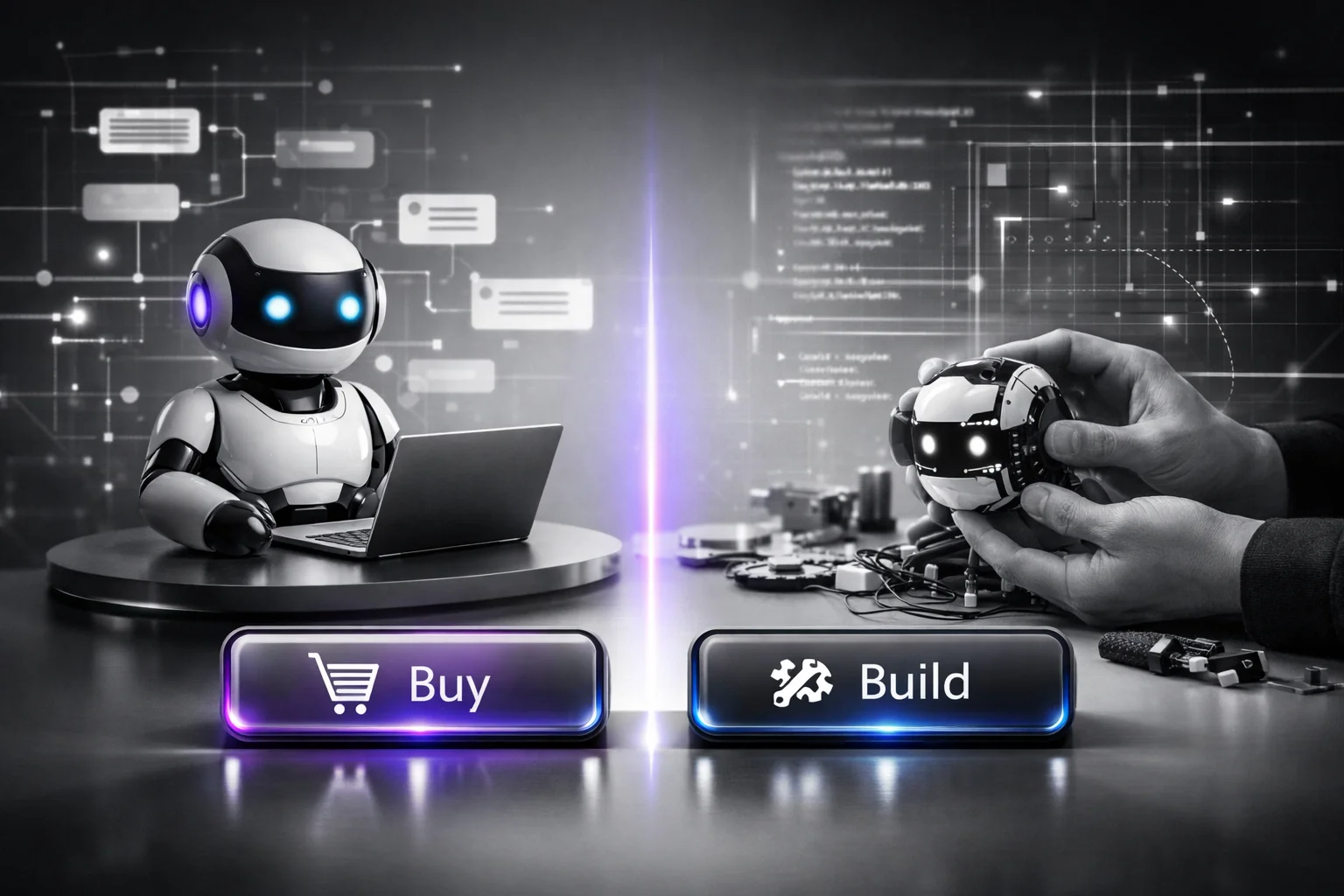
AI Receptionist Bot ROI: The Value Gap
Most companies buying an AI receptionist bot are measuring the wrong thing. They obsess over headcount savings, then act surprised when the numbers feel thin....

Most companies buying an AI receptionist bot are measuring the wrong thing. They obsess over headcount savings, then act surprised when the numbers feel thin.
The real AI receptionist bot ROI shows up somewhere less obvious: missed call recovery, faster lead capture, tighter call routing, and fewer revenue leaks your team stopped noticing a long time ago. And here's the uncomfortable part. A lot of AI projects still miss their targets, not because the tech can't answer calls, but because the setup behind it is sloppy.
In this article, I'll show you where the value gap actually comes from, what the data says, and how to calculate ROI in a way that doesn't flatter a bad implementation.
What Is an AI Receptionist Bot?
Hot take: the voice isn't the problem. People obsess over whether an AI receptionist sounds smooth, warm, human, whatever. Wrong test. The thing that wrecks results is whether it can actually do receptionist work after it answers the call.
You can hear that gap in the numbers. Only 44% of contact centers say they got the ROI from AI they expected. Which means most of them didn't buy a miracle. They bought a mess with a nice demo voice.
An AI receptionist bot isn't just a dressed-up answering service. It's a virtual receptionist bot that takes inbound calls, uses natural language processing (NLP) to figure out what the caller wants, handles routine requests, collects lead details, and sends the caller to the right person or workflow through call routing. That's the job. Answer when your staff can't, then move the call somewhere useful instead of dumping it into a digital graveyard.
People lump this in with voicemail, IVR, and website chat. They shouldn't. Voicemail records audio and leaves your team squinting at half-mumbled names later. IVR makes callers play phone-tree roulette with “press 1 for sales.” A website chatbot can be fine for typed questions, but it's not running a live phone conversation with someone calling from their car at 8:12 a.m. trying to reschedule a dentist appointment.
An AI receptionist bot is a voicebot. Different category. It uses conversational AI to ask follow-up questions in real time — “Are you calling about a new appointment or an existing one?” — and then it can book, qualify, route, or log that interaction directly in your systems. I'd argue that's where actual AI receptionist bot value begins. Not with charm. With completed work.
The ugly part usually shows up after the sale. According to COPC, 48% of respondents said integration challenges were the main reason AI implementations failed operationally. That sounds dry until you see what it means on a Tuesday morning. A clinic gets 120 calls before lunch. The bot answers all 120. Great. But if it can't write back to the scheduling system, connect to the CRM, follow scheduling rules, or trigger the right escalation path, staff still have to replay every call by hand. I've seen teams lose two hours before noon doing exactly that. That's not automation. That's extra admin wearing better branding.
The day-to-day role is simpler than people make it sound. It answers every call it can. It identifies intent. It cuts missed opportunities through better call capture optimization. And when something odd comes in — because something odd always comes in — it hands the caller to a human without making them repeat everything from scratch.
So no, I wouldn't start with “Does it sound human?” I'd start with whether it can book appointments, route correctly, capture leads, update systems, and hand off edge cases cleanly inside your business. That's how you judge AI call answering ROI, not by how polished the demo sounded or how attractive the AI receptionist bot pricing looked on slide 14.
If you want to see how voice systems fit into real operations, read Ai Voice Bot Call Center Deployment Strategy. Strange part is this: callers will forgive an imperfect voice faster than they'll forgive being sent nowhere useful — so what are you really buying?
Why AI Receptionist Bot ROI Is Usually Undervalued
Why does an AI receptionist bot so often look overpriced right up until the moment a company finally installs one?
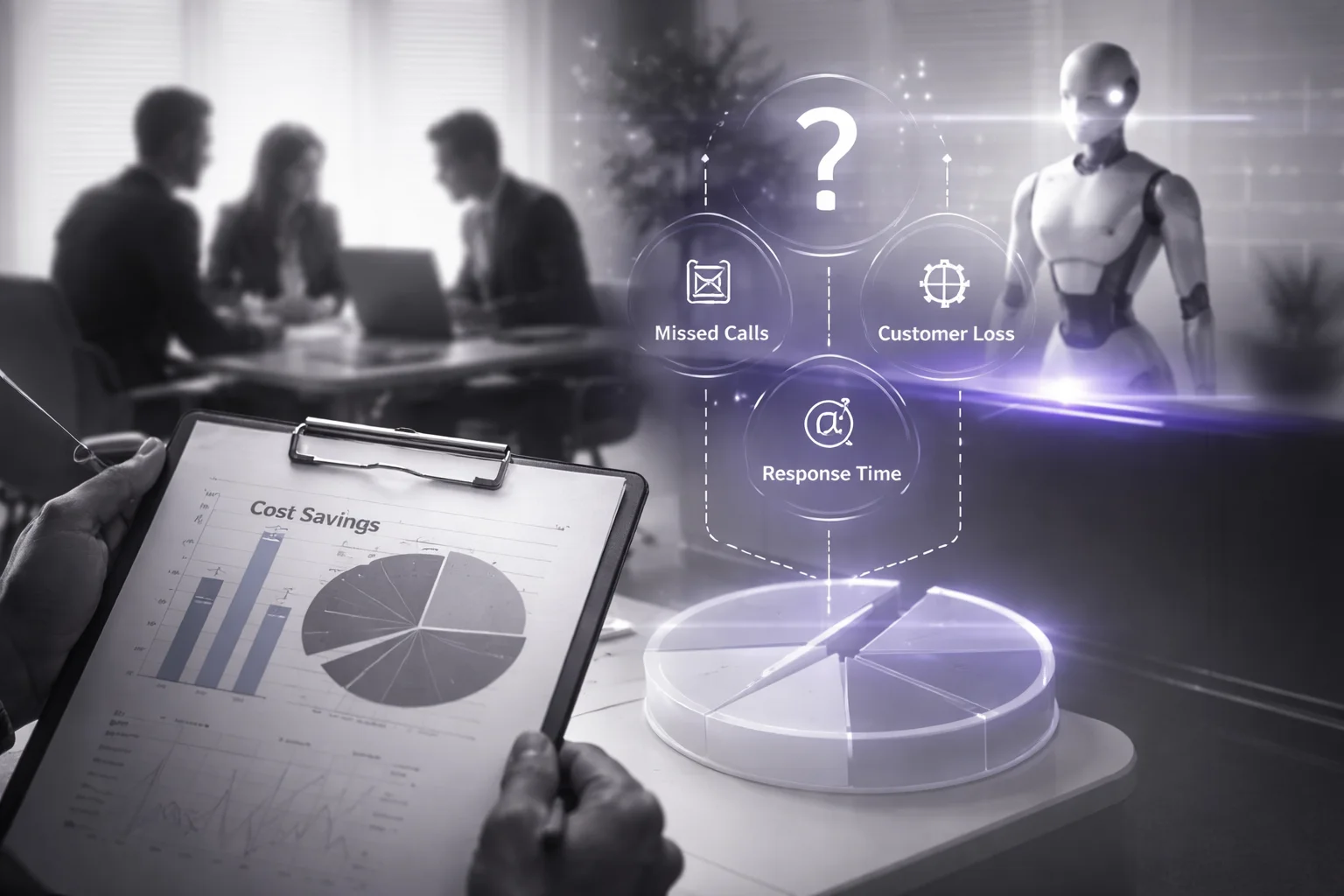
I think the bad answer shows up first because it fits neatly in a spreadsheet. Receptionist salary on one side. Software subscription on the other. Maybe somebody tosses in a few projected savings, maybe the ops lead colors a couple cells yellow, and everybody nods along like they’ve done serious analysis. I’ve sat in that meeting. It feels sharp. It isn’t.
The weird part is what gets left out. Not theoretical stuff. Real moments. A call at 12:07 p.m. while the front desk is checking in a walk-in. The 5:37 p.m. caller who wants to book and gets nobody. Three inbound calls landing at once, two of them hearing ring after ring, both gone before a minute passes. I’ve seen businesses lose leads in under 90 seconds just because no human got there fast enough.
One budget review sticks with me because it was so ordinary. One salary against one monthly fee. Done. Everyone acted like that was discipline. Nobody counted lunch coverage. Nobody counted after-hours volume after 5:30 p.m. Nobody counted the intake calls that never made it into the CRM because nobody answered in time. Clean model. Messy reality.
That’s the answer: the missing money usually isn’t payroll reduction. It’s revenue that never got captured.
A missed new-patient call at a clinic isn’t just an unanswered line item. It’s a patient who was ready enough to call and then booked somewhere else. Same story at a law firm with intake calls. Same thing for a home services company getting an after-hours quote request. If your ROI model only asks whether a virtual receptionist bot can replace receptionist labor, you’re measuring the cheap part of the equation and ignoring the expensive one.
I’d argue that’s where teams fool themselves most often. Better AI phone answering doesn’t just shave labor minutes; it changes who gets booked first, who reaches the right department through call routing, and who never bothers calling your competitor because the response was immediate. A voicebot built on conversational AI and natural language processing (NLP) can identify intent fast, handle simple requests, and move people where they need to go before staff even picks up.
Nextiva says most companies recover their AI investment in under 3 months. You don’t hit payback that quickly by cutting front-desk hours alone. You hit it through higher throughput, stronger lead capture, after-hours coverage, and fewer dropped opportunities.
But I don’t buy rosy ROI math either if the plumbing behind it is bad.
COPC found that 48% of respondents said integration challenges caused operational failure in AI projects. That number matters more than most vendor demos do. If your bot can answer beautifully but can’t push data into CRM records, scheduling workflows, or escalation rules, then your projected upside is probably fiction.
The fix is less glamorous than people want. Audit value in three buckets: labor saved, revenue recovered from fewer missed calls, and conversion lift from faster response time. Then revisit your AI receptionist bot pricing after real call capture optimization. Usually the sticker shock fades once you stop pretending payroll is the whole story.
If you want to test that workflow before buying anything, start here: Ai Receptionist Bot Multimodal Blueprint. And if your current ROI sheet still has only two columns on it, what exactly do you think it’s measuring?
The Receptionist Bot Value Assessment Framework
I watched a team blow the ROI math in about 15 minutes once. They put one number on the whiteboard for front-desk payroll, one number for software, circled the difference, and called it done. Nice neat spreadsheet. Totally wrong.
That’s the trap. People compare receptionist wages to AI receptionist bot pricing and act like they’ve finished the job. I get why—it’s easy. I’d argue it’s also outdated, because the front desk doesn’t just cost money. It catches money. It protects money. It keeps a caller from hitting voicemail at 12:07 p.m. because the human covering phones is on lunch and the backup is already juggling three other things.
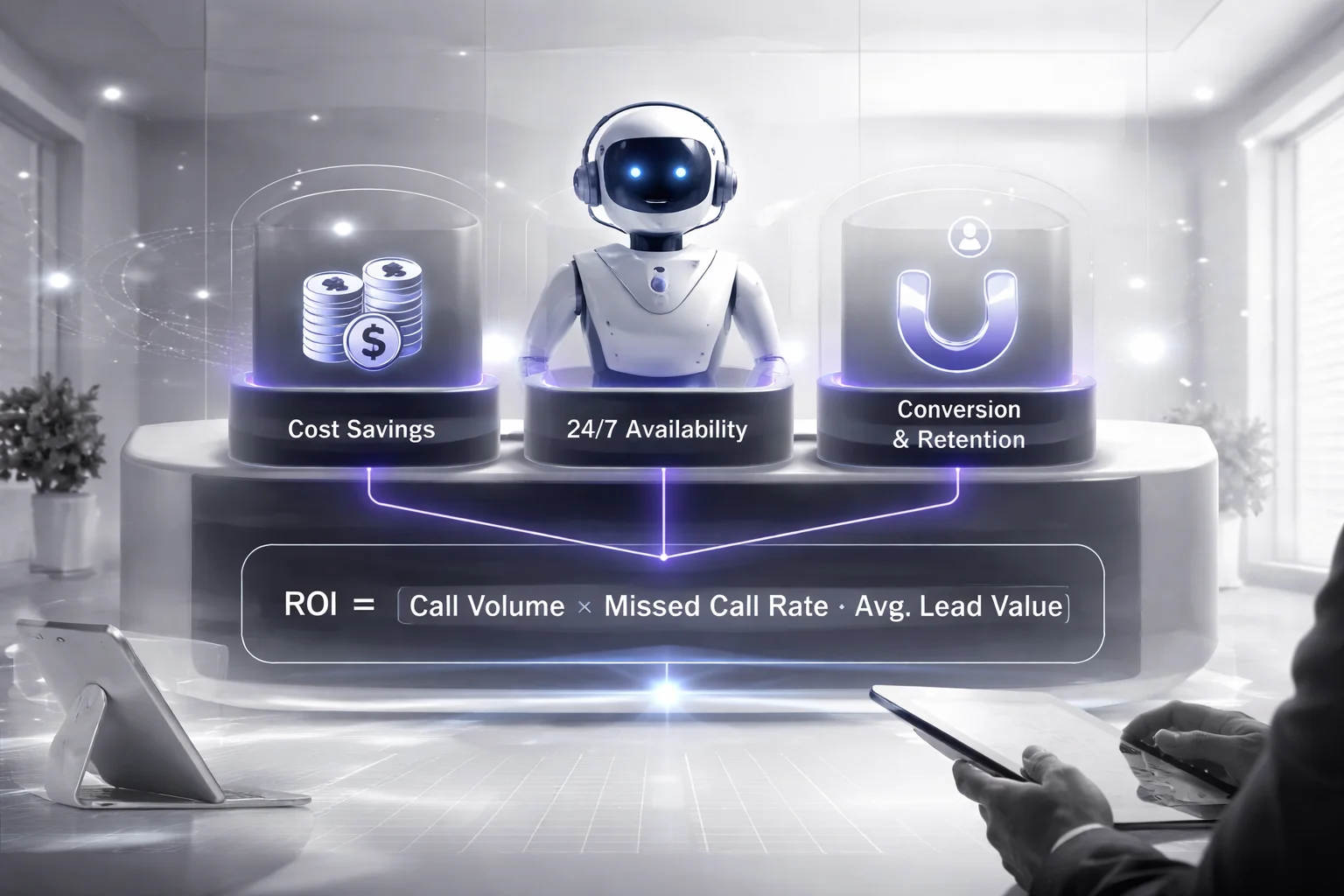
That’s where the real model starts, not with one savings line but with three separate buckets for AI receptionist bot ROI: cost savings, never-miss availability value, and conversion or retention value.
Start with the obvious one anyway. Cost savings. You take current receptionist coverage costs and subtract the annual cost of the bot, including setup, oversight, and exception handling. Nextiva’s 2026 calculator gives a blunt example: roughly $195,000 a year for three full-time receptionists versus about $26,280 annually for similar AI coverage. That works out to a claimed 642% ROI. Real number. Useful benchmark. Just not enough by itself.
The middle bucket is usually where this stops being theoretical. Never-miss availability value. Missed calls don’t just happen after hours; they happen during holiday weeks, shift handoffs, sick days, lunch breaks, and those weird Monday mornings when everyone’s busy and nobody’s actually answering the phone. A good virtual receptionist bot picks up 24/7, figures out what the caller wants, and sends them somewhere useful instead of dumping them into a dead-end menu tree from 2014. That’s why voicebot quality matters so much—good natural language processing (NLP), smart call routing, and dependable AI phone answering.
The bucket finance teams tend to undersell? Conversion or retention value. Fast answers change outcomes. Better routing changes outcomes. Appointment help changes outcomes. Immediate follow-up absolutely changes outcomes. If a caller gets that instead of voicemail, more leads turn into customers and fewer existing customers bail after one bad interaction. That’s a huge chunk of real AI call answering ROI. Better response quality improves call capture optimization, and it saves accounts that never show up in a basic staffing comparison.
I think this is where a lot of buyers get lazy with numbers. They’ll model salaries down to the dollar and then treat recovered revenue like some fuzzy maybe. Meanwhile a single missed intake call in a legal office or dental practice can be worth hundreds or thousands over time. Ignore that if you want, but don’t pretend you’re doing serious analysis.
Use the framework like this:
Annual ROI = [(Cost Savings) + (Recovered Missed Calls × Lead Conversion Rate × Average Lead Value) + (Handled Calls × Conversion Lift % × Average Lead Value)] - Annual Bot Cost
You can fill in your own assumptions pretty quickly:
- Recovered Missed Calls = Monthly call volume × current missed-call rate × recovery rate from conversational AI
- Handled Calls = Monthly qualified inbound calls handled by the bot × 12
- Annual Bot Cost = subscription + implementation + integrations + internal admin time
I like this model because it looks more like how businesses actually make money in operations—not how budget sheets pretend they do. It also helps explain why Nextiva says many businesses recover their investment in under 3 months, depending on assumptions and operating conditions. Once you stop treating reception as nothing but a labor expense, the spreadsheet gets honest fast. So why are so many ROI models still pretending missed calls don’t count?
How Never-Miss Availability Creates Hidden Revenue
Most owners underprice missed calls because they pretend every missed call is basically the same. I think that's the mistake. It's neat, it fits in a spreadsheet, and it's dead wrong.
I saw this up close with a local service business in late 2025. They were working through an AI receptionist rollout and built a tidy little model: missed call equals small loss, multiply by volume, done. Looked rational. Wasn't. The model ignored the one thing that actually changes the money fast—timing.
A call at 2:14 p.m. from someone comparing options isn't worth the same as a call at 8:47 p.m. from somebody who needs help now and is ready to book whoever answers first. Those aren't cousins. They're different species. I've watched that second caller switch providers in under five minutes, and honestly, sometimes it's closer to two.
People talk about availability like it's one problem. It isn't. Revenue leaks in three different places: after-hours calls, peak-time overflow, and the everyday chaos that hits when the front desk gets dragged into something else.
After-hours is the obvious one, but people still get lazy about it. Old setup: voicemail picks up, maybe the caller leaves a message, maybe they don't, and by morning they're already with someone else. Better setup: AI phone answering grabs the call immediately, uses conversational AI and natural language processing (NLP) to figure out intent, collect details, or start call routing. Same business. Same caller. Different outcome.
The middle problem is uglier because it sneaks up on teams that think they're staffed fine. A human receptionist gets one conversation at a time. That's the ceiling. A virtual receptionist bot doesn't panic when five calls hit inside ninety seconds—which happens after ad campaigns, during lunch rushes, after weather events, or on those Monday mornings when everyone suddenly remembers they meant to call last week. The fifth caller hears an answer instead of dead air and starts acting like your company has its act together.
The boring leak is usually the expensive one. Somebody's in a meeting. Somebody took lunch early. Somebody stepped away for two minutes to help an in-person customer and three calls landed at once. That's not some rare operational disaster. That's Tuesday. According to AI Answering Reviews, small businesses miss nearly two-thirds of incoming calls on average in 2026. Even if your business beats that number by a mile, you're still probably losing enough calls to feel it in booked revenue.
This is why I'd push back on the usual labor-savings pitch around an AI receptionist bot. The bigger win often isn't headcount math. It's trust math. Callers don't care that your receptionist is helping someone at the counter or that your office closes at 6:00 p.m. They hear ringing, silence, or a recording telling them you'll get back to them later. A solid voicebot changes that first impression fast, and first impressions decide who gets paid.
Nextiva gets close to the real point when it describes an AI receptionist as a force multiplier for staff—freeing people up for growth work instead of repetitive call handling. That's where better AI call answering ROI usually shows up: not from replacing humans outright, but from protecting staff attention while improving call capture optimization.
If you want a useful way to price this without fooling yourself, don't start with average missed-call value. Start with exposure. Build three columns: after-hours exposure, overflow exposure, interruption exposure. Score each one by how often those calls happen and what a captured lead is actually worth in your business. Then put that against your current AI receptionist bot pricing. That's usually when the spreadsheet stops pretending and starts arguing back.
If you want to map handoffs and call flows more closely, this guide on Ai Receptionist Bot Multimodal Blueprint is worth reading.
Funny part is this: the calls that look smallest on paper are often the ones made by people least willing to wait—so why are those still getting sent to voicemail?
AI Receptionist Bot Implementation Design for Maximum Call Capture
I watched a home services team spend a pile of money on an after-hours virtual receptionist bot, then lose an emergency job anyway. The caller said, “My AC is out and I need someone tonight.” The bot stayed weirdly calm, treated it like a normal quote request, collected the name, and kept rolling through the script like nothing was on fire. No urgency detection. No escalation. No dispatch handoff. Technically, the call got answered. In reality, they still missed it.

That's the trap. People obsess over answer rate because “100% of calls answered” looks fantastic in a demo slide. I'd argue that's one of the most misleading numbers in this whole category. A bot can pick up every single call and still fail at call capture optimization.
The ugly math behind this is real. Nearly two-thirds of incoming calls go unanswered for the average small business in 2026. And those aren't throwaway calls. They're the 8:47 p.m. breakdown, the first-time customer ready to book, the billing complaint that turns into a cancellation if somebody handles it badly.
No surprise adoption jumped. According to AI Answering Reviews, businesses using AI answering services climbed from 39% in 2024 to 55% in 2025. That doesn't happen because owners suddenly got excited about shiny software. It happens because missed calls are a leak, and leaks get expensive fast.
The lesson isn't “buy a bot.” It's build one that knows what kind of call it's hearing and what should happen next. That's the whole job. Get each caller to the next useful step without making them fight the system.
- Start with intent, not button-mashing menus. Your conversational AI should use natural language processing (NLP) to catch signals like “new customer,” “existing appointment,” “billing issue,” or “urgent service.” A good voicebot feels faster than IVR. If it just sounds friendlier while doing the same old menu-tree nonsense, you've solved nothing.
- Set hard escalation rules before launch. Low confidence score? High urgency? Caller asks twice for a person? Hand it off. I've seen teams wait until week three to define this stuff, and by then they're already listening to angry recordings they could've avoided.
- Don't fake scheduling. Pull real availability from the live calendar and confirm time zone, location, and service type before booking anything. One wrong slot can wreck a day's route schedule, and bad scheduling kills AI call answering ROI quietly enough that some teams don't notice until dispatch is furious.
- Make fallback useful. If no human's available, don't just end politely. Collect lead details, summarize the issue, send an SMS confirmation, and create a CRM follow-up task so the call still moves forward.
- Carry context through the handoff. Good call routing passes over the transcript, caller reason, and whatever data was already collected. Nobody wants to repeat their story because your system forgot what just happened 12 seconds earlier.
This is where buyers either make their money back fast or start saying the tech “didn't work.” Usually the tech did work. The setup didn't. I've seen teams spend two weeks comparing voices, dashboards, and AI receptionist bot pricing, then barely touch escalation logic at all. Then booked jobs stall and everybody acts surprised.
If you're actually mapping these flows instead of winging it, this guide on Ai Voice Bot Call Center Deployment Strategy is worth reading.
The part vendors don't say loudly enough: better implementation often matters more than getting a cheaper system. Cheap tools answer calls. Well-built systems capture revenue. So what are you really shopping for here—coverage or outcomes?
How to Measure AI Receptionist Bot Success After Launch
What tells you an AI receptionist bot is actually working?
Not the first dashboard your vendor shows you. Not the tidy chart with deflection rate climbing up and to the right while everybody in the room nods like that settles it. I've sat in those reviews. They look great right up until someone from finance asks what changed in booked revenue.
Small businesses already seem to feel the impact. 91% of them reported revenue improvements from AI, according to AI Answering Reviews. That's the part people should linger on. Revenue improvements. Not prettier ops metrics. Not a screenshot for LinkedIn.
And this matters more now because adoption keeps climbing — from 39% in 2024 to 55% in 2025. More companies have AI answering calls. Fewer can prove what it's doing besides "handling more volume." I've seen teams spend six weeks tuning prompts and still have no clean answer on whether the thing saved a single lead after 6 p.m.
Here's the answer: measure what changed because the bot existed, not just what the bot did.
But don't flatten that into one lazy number.
Answered-call rate comes first. I don't care if that sounds basic. It's basic in the same way locking your front door is basic. If your AI phone answering setup moved inbound answer rate from 41% before launch to 88% after, that's not fluff. That's fewer people dumped into voicemail, fewer prospects tapping the next business on Google five seconds later, fewer Monday-morning mysteries about why leads dried up.
Then pull after-hours capture out into its own line item. Don't hide it inside total call volume and call it a day. Evening calls, Saturday calls, lunch-rush overflow — that's where a lot of virtual receptionist bot value sits quietly while everyone stares at weekday averages. If your voicebot answered 47 Saturday calls in a month and turned 11 of them into booked appointments or qualified service requests, that's your story. "24/7 coverage" is just a slogan unless you can show me those 11 outcomes.
Lead-to-booking conversion is where the math stops being theoretical. Say your conversational AI handled 100 new-lead calls, booked 32 consultations, and each one is worth $600 on average. That's $19,200 in booking value tied to actual caller movement. I'd argue that's a lot more honest than bragging that you "automated 70% of inquiries," which usually means nothing to anyone who signs checks.
Add abandoned-call recovery. This one gets ignored all the time, and I think that's a mistake bordering on negligence. If somebody hangs up after 19 seconds, your system shouldn't just shrug and move on. If it sends an SMS, creates a follow-up task, or triggers a callback workflow, track what came back and what converted. I've watched businesses recover leads this way that would've been gone for good — especially in home services, where one missed plumbing call at 8:14 p.m. can mean a $900 job going elsewhere by 8:20.
Tie everything to revenue influenced. Use CRM tags, booking-source fields, and call routing logs so you can show pipeline created and closed revenue touched by the bot. That's how you make AI call answering ROI believable. Otherwise you're just asking people to trust that activity equals impact, and they won't for long.
The report itself doesn't need to be fancy. One page is enough: answered-call lift, after-hours leads captured, lead-to-booking rate, recovered abandons, revenue influenced, and cost against AI receptionist bot pricing. If you want a cleaner structure for that reporting layer, read this breakdown of Ai Receptionist Bot Multimodal Blueprint.
Your dashboard should answer three things fast: how much revenue got protected, how much revenue got created, and where natural language processing (NLP) actually changed caller behavior. If it can't do that after launch excitement fades, what exactly are you measuring?
When an AI Receptionist Bot Actually Makes Sense
A while back, I watched a business miss the point in real time. Monday morning. Phones blowing up. Dozens of inbound calls before 10 a.m. On paper, it looked perfect for automation. High volume, busy staff, obvious pain. So they put in a bot.
The bot did its job. Answered fast. Logged conversations. Routed what it could. The business still looked sloppy because half the calls were weird exceptions, the CRM was full of junk fields nobody trusted, and nobody owned escalations once a caller fell off the happy path.
That's the part people skip. AI receptionist bot ROI doesn't start with call count. It starts with whether answered calls can turn into clean next steps.
COPC put a number on this: only 44% of contact centers said their AI deployments hit expected ROI. Which means 56% didn't. I'd argue that stat gets misread all the time. People hear “AI underperforms.” I hear “operations were a mess, and the software got blamed for it.”
Look at where your calls land. That's usually where the truth is.
If about 30% to 60% of inbound calls follow repeatable paths, you're probably in range for a good fit. Appointment booking. Lead qualification. Hours and locations. Billing checks. Intake questions. Status updates. Stuff with a pattern. Stuff where the tenth call sounds a lot like the first.
If every other caller needs senior judgment, exceptions, or hand-built problem solving, a virtual receptionist bot won't rescue you. It'll just record your chaos more neatly.
I think this is where buyers fool themselves because volume is flashy and patterns are boring. Patterns matter more.
Missed-call timing matters too. If your team drops calls at lunch, after hours, or during predictable spikes, that's real territory for a voicebot. Good AI phone answering, paired with natural language processing (NLP) and smart call routing, can cover those gaps without hiring for the single busiest hour of the week.
If your front desk already answers almost everything live and does it well, then the AI receptionist bot value probably isn't headcount reduction. It's overflow coverage and cleaner data capture.
The ugly part? Readiness.
If your calendars are messy, your CRM fields are inconsistent, your routing rules live in someone's head, and escalations don't have an owner, fix that first. Not sexy advice. Still true. I've seen teams lose weeks because one office used “new patient,” another used “NP,” and the bot had to guess what bucket to drop people into.
COPC says integration is the top ROI killer. That tracks. Implementation readiness matters just as much as AI receptionist bot pricing. If you want to map those workflows before rollout, read Ai Receptionist Bot Multimodal Blueprint.
The test I'd use is simple: would better call capture optimization create revenue, not just shave admin time? And can your team support clean handoffs once the call gets answered?
If yes, the case is strong. If not, don't buy a bot because the demo had a polished voice and perfect timing. Wait until your operation is ready to cash in on being easier to reach. Otherwise what exactly are you automating?
FAQ: AI Receptionist Bot ROI
What is an AI receptionist bot?
An AI receptionist bot is a virtual receptionist bot that answers calls, understands what the caller wants, and takes action in real time. It can handle AI phone answering, appointment scheduling, basic FAQs, call routing, and lead capture without making callers sit through a clunky IVR tree.
How do you calculate AI receptionist bot ROI?
Start with labor savings, then add the money tied to better call capture, missed call recovery, and faster response times. A real AI receptionist bot ROI model should include setup, integration, AI receptionist bot pricing, ongoing usage, and any lift in booked appointments or qualified leads. If you only compare subscription cost to receptionist wages, you’ll miss the biggest part of the value.
Why is AI receptionist bot ROI often undervalued?
Most teams measure cost reduction and ignore revenue protection. That’s a mistake, because the average small business misses nearly two-thirds of incoming calls, according to AI Answering Reviews in 2026, which means the AI receptionist bot value often shows up in recovered opportunities, not just lower payroll. I think this is where a lot of buyers undersell the business case to themselves.
How can an AI receptionist bot increase call capture?
It answers every call, including after hours, during lunch, and when your front desk is already busy. That always-on coverage improves call capture optimization by reducing abandonment, routing callers faster, and collecting lead details even when no human is available. If your business depends on inbound demand, that alone can shift AI call answering ROI fast.
Can an AI receptionist bot handle appointment scheduling and call transfers?
Yes, if the system is set up well. A good voicebot can book appointments, confirm availability, answer simple questions, and transfer urgent or high-intent callers to the right person based on rules you define. The trick isn’t whether it can do this, it’s whether your call flows and escalation paths are clean.
Does an AI receptionist bot integrate with CRM systems?
It should, because CRM integration is where a lot of the real ROI gets proved. When caller data, call outcomes, and lead capture details sync into HubSpot, Salesforce, or another CRM, your team can track conversion rate optimization instead of guessing. According to COPC in 2026, 48% of respondents said integration challenges were the primary cause of operational failure in AI implementations.
What metrics should you use to measure AI receptionist bot success?
Track call answer rate, call capture rate, missed call recovery, appointment scheduling rate, transfer accuracy, deflection without frustration, and downstream conversion to revenue. You should also watch call analytics like average handling time, escalation rate, and caller drop-off by intent. If you can’t tie those numbers back to pipeline or booked business, your AI receptionist bot ROI story will stay fuzzy.
When is an AI receptionist bot the right business move?
Usually when you have more inbound calls than your team can reliably answer, or when missed calls are quietly costing you revenue. It’s especially compelling for businesses with after-hours demand, repetitive call types, multi-location routing needs, or expensive staff spending too much time on routine customer service automation. If your phones are a growth channel, this gets interesting quickly.
What costs should be included in an AI receptionist bot ROI model?
Include implementation, conversation design, integrations, testing, monthly platform fees, usage-based charges, and internal admin time. You should also count the cost of exceptions, like human handoff coverage for edge cases, because that affects true AI receptionist bot pricing over time. A clean model compares total cost against both labor savings and revenue lift.
How long does it typically take to implement an AI receptionist bot and go live?
The implementation timeline depends on how complex your call routing, appointment scheduling, and CRM integration need to be. Simple deployments can go live quickly, while multi-team workflows with custom escalation rules take longer because testing matters more than speed. I’d rather see a bot launch one week later and actually work than go live fast and annoy callers.