AI Agent for HR Automation: Safe Playbook
Most HR AI projects don't fail because the models are weak. They fail because companies hand sensitive people decisions to messy workflows, bad permissions,...

Most HR AI projects don't fail because the models are weak. They fail because companies hand sensitive people decisions to messy workflows, bad permissions, and zero accountability. That's the part vendors love to skip.
An AI agent for HR automation can absolutely save time and clean up repetitive work. It can also create bias at scale, break compliance, and make your audit trail useless if you roll it out like a fancy chatbot with admin access. We'll show the evidence, where these systems actually help, where they go sideways, and the seven-part playbook for deploying them safely without turning HR into an uncontrolled experiment.
What Is an AI Agent for HR Automation?
600 times. That's how often HR can end up answering the same question again and again while forms go missing somewhere between systems. I wince at that number because it sounds exaggerated until you've watched a team lose a whole morning to one silent failure.
At 2:14 a.m., a hiring workflow broke. Nothing cinematic. A candidate uploaded documents, the status never updated, no alert went out, and by 9:00 a.m. HR was stuck comparing three different systems that each insisted they were right. I've seen that exact kind of mess before. A script kept doing its job perfectly, right up to the second the real world stopped fitting the logic someone wrote six months earlier.
That's usually where the sales pitch gets slippery. Ask what an AI agent for HR automation actually is, and you get a grab bag: chatbots, workflow builders, recruiting tools, old if-this-then-that rules with better branding. Toss in the word “agentic,” add a polished demo, hope nobody asks hard questions.
A chatbot talks. A workflow tool routes a ticket. A script repeats itself until it hits something weird and falls over. HR can buy all three and still spend half the week chasing handoffs, fixing broken status changes, and hunting for missing forms across Workday, Greenhouse, and some shared inbox nobody wants to admit still runs part of onboarding.
The part buyers usually mean sits somewhere in the middle of all that noise. Not another dashboard. Not another chat window pretending to be smarter than it is.
An AI agent for HR automation is software that watches incoming data, decides what should happen next, and then takes action across HR systems while staying inside rules and guardrails. ValueX2 describes agentic AI in HR as a move away from manual, reactive work toward autonomous multi-step workflows that monitor data, choose next actions, and execute across tools without waiting for a human prompt. So your HR automation AI agent doesn't stop at answering “Where's my PTO balance?” It can route a leave case, request missing documents, log every step it took, and escalate when policy says it should.
I think this is the line vendors blur on purpose. If it has a chat box, they call it an agent. It isn't.
A real AI recruiting assistant can screen candidates against role criteria, flag missing qualifications, schedule interviews, and leave behind an audit trail someone can inspect later. A real onboarding AI agent can trigger account provisioning, chase incomplete forms, coordinate first-week tasks, and verify that each step matches company policy instead of somebody's memory of policy. Precedence Research says these systems are already being used for onboarding, compliance documentation, payroll validation, workforce scheduling, performance monitoring, and internal workflow coordination.
Calling that “just a bot” undersells the thing by a mile. It's closer to giving HR a junior chief of staff who never sleeps and also can't improvise outside approved boundaries.
And that's the boring part people skip in demos because it's less flashy: autonomy without limits is just risk dressed up nicely.
The distinction isn't complicated. Chatbots answer. Scripts repeat. Workflow tools route. Intelligent agent systems can reason across multiple steps inside governed limits. In HR, those limits matter more than clever language or smooth demos. You need HR compliance automation, fairness and bias mitigation, bias testing for HR AI, algorithmic auditing, and clean audit trails. Otherwise your new layer of HR workflow automation just helps you make bad decisions faster.
If you're evaluating one of these systems, start with tools, permissions, and supervision before features pull you off track. Look closely at how agents are controlled across systems and how frameworks such as Anthropic Claude Sdk handle oversight. If an agent can act inside HR but can't tell you what it touched, who approved it, or when it's supposed to stop — what exactly are you buying?
Why HR Automation Fails Without Fairness and Compliance
I watched a hiring team rush this once, and the mistake was painfully ordinary. Thursday, 4:37 p.m., 312 applicants stacked up for one operations role, recruiters cooked, hiring managers pinging every ten minutes, and somebody said, “Just turn on the AI.” For a week, it looked brilliant. Screening moved faster. Routing got cleaner. Onboarding steps started firing automatically. Then a candidate got hit hard for a six-month résumé gap, while another applicant with basically the same gap slipped through like nothing happened. Nobody in the room could explain it.
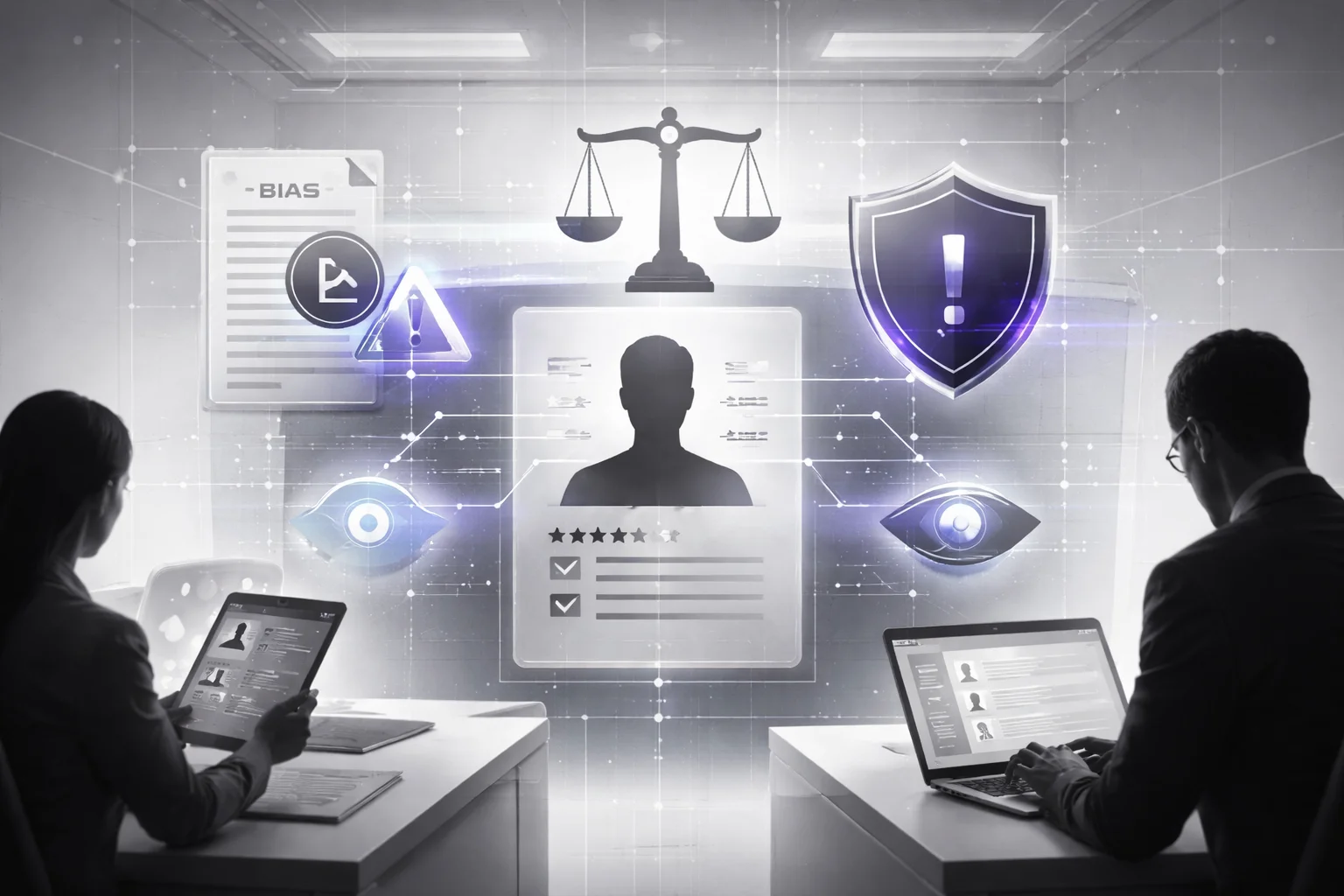
That’s the part people hate admitting. It usually doesn’t fail because the model is awful. I think that excuse lets leadership off way too easily. It fails because governance gets treated like post-launch cleanup instead of part of the product.
The temptation is obvious. Manual hiring is slow, expensive, and messy. Juicebox says AI can automate about 80% of recruiter time spent on manual top-of-funnel work, which is a massive number if your team is drowning in résumé review and interview coordination. But speed isn’t wisdom. If you automate bad judgment, you just reject people faster, stall decisions at scale, or expose private data with more efficiency than before.
That’s the real business problem, not the flashy demo. Companies buy into HR workflow automation because they’re sick of bottlenecks and admin drag. Fair enough. They still can’t afford inconsistent decisions, clumsy candidate experiences, or privacy mistakes that stay invisible until legal counsel, regulators, or the board starts asking very direct questions.
If your HR automation AI agent treats similar applicants differently, that’s not efficiency. It’s drift in a blazer.
The legal side gets ugly fast. Hiring data and employee records live in some of the most sensitive systems a company owns. A careless AI recruiting assistant can infer protected traits from proxies without anyone setting out to do that. A rushed onboarding AI agent can collect more personal information than it actually needs. And once someone asks why the system made a recommendation, “the model thought so” isn’t an answer anybody serious will accept.
I’ve seen teams brag about aggregate accuracy numbers and completely miss what matters more: who got helped, who got filtered out, and whether those outcomes held steady across groups instead of hiding behind one nice average.
So here’s the framework I’d use.
First: set constraints before rollout. Start with what the system may read and what it may write. Decide where approval is mandatory. Decide which actions are never autonomous under any circumstance. Boring? Sure. Also the difference between real HR compliance automation and theater.
Second: test for fairness before you trust anything. You need bias testing for HR AI before launch, not after complaints show up. Check outcomes by group. Compare similar cases. Look at exception patterns instead of hiding behind one performance score.
Third: make decisions explainable to normal humans. Policies should be readable without a translator standing nearby. If your recruiting lead or HRBP can’t understand why a recommendation happened, you don’t have control — you have vibes.
Fourth: review repeatedly. Not once. Repeatedly. You need algorithmic auditing, and it has to inspect results by group rather than stopping at an overall average that flatters the system while masking who gets squeezed out.
Fifth: log everything that matters. Keep audit trails showing who approved what, what the system did, and where humans stepped in. If something goes wrong three months later, memory won’t save you.
I’d argue architecture belongs in this conversation much earlier than most teams want to admit. Permissions matter. Supervision patterns matter. Framework choices matter too, including tools tied to controlled oversight patterns like Anthropic Claude Sdk. Policy isn’t some lonely PDF buried in legal’s folder tree. It either lives inside system design from day one or it doesn’t really exist.
The funny part is the fastest-moving teams often look slower at first. They document edge cases. They challenge outputs. They ask for proof before trust becomes habit. In one pilot I saw, a team delayed launch by two weeks just to review exception handling in candidate routing rules. Everybody was annoyed then. Nobody was annoyed later.
That’s not bureaucracy. That’s how you stop an ambitious system from becoming a very efficient liability.
If your HR automation can move faster than your ability to explain it, should it be making decisions yet?
High-Impact HR Use Cases for AI Agents
43%. That was the share of HR teams using AI in workflows like help desk automation, self-service portals, and onboarding, up from 26% just one year earlier, according to a 2025 SHRM figure cited by Auxis.
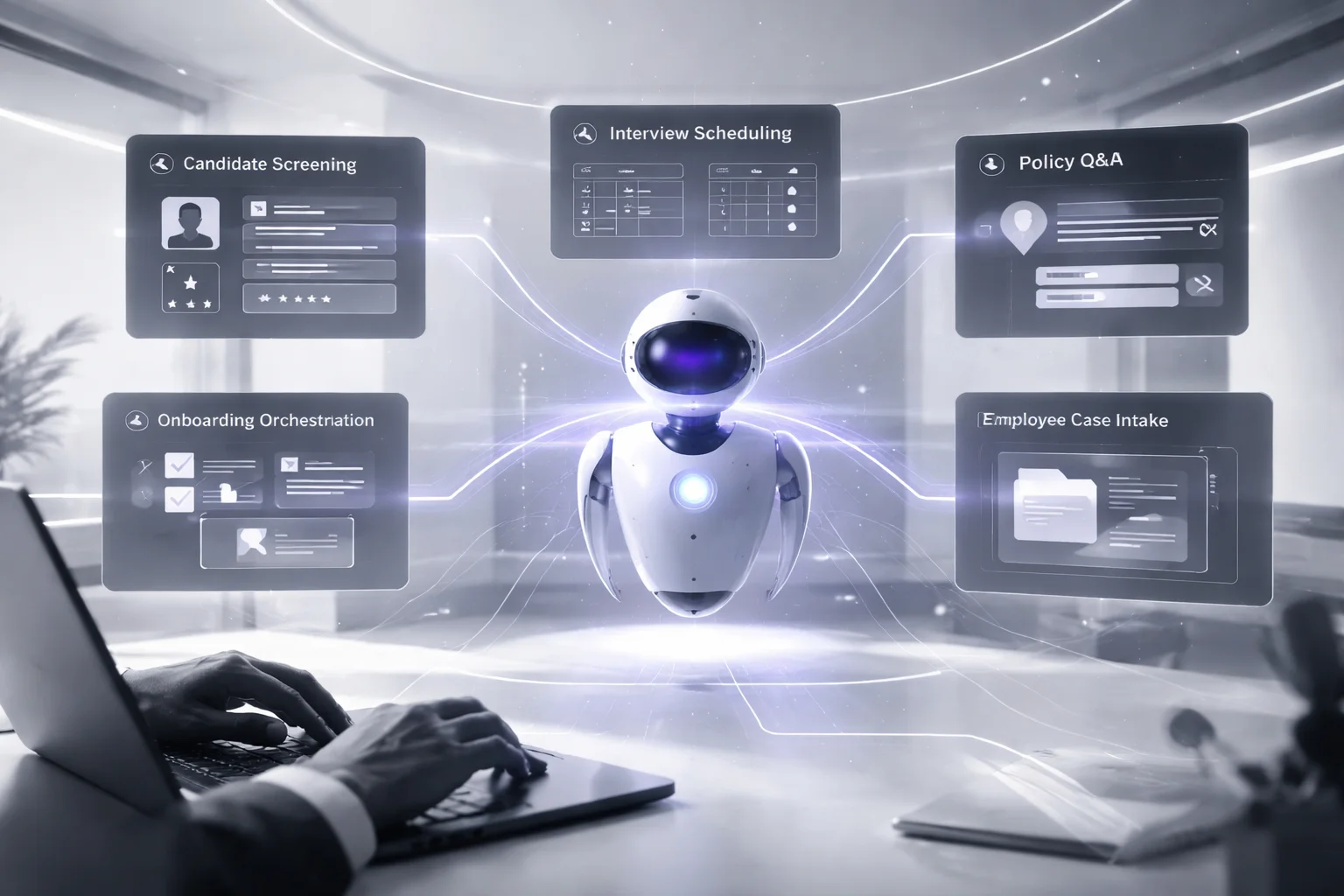
That jump gets my attention. Not because it's flashy. Because I've seen what usually happens after numbers like that hit a board slide: somebody decides the bot should start making people decisions instead of handling people logistics.
That's the mistake.
The real savings don't come from handing judgment to software. They come from clearing out the repetitive coordination sludge that quietly steals hours every week — the calendar chasing, document reminders, status checks, routing, summarizing, logging. Half a day here. Two days there. Then someone shrugs and calls it “just admin” like that time doesn't cost anything.
So if you're asking what an AI agent for HR automation should actually do, I'd keep the answer tight: high-volume work, clear rules, obvious handoffs. Let the system prepare, route, check, remind, summarize, and document. Let humans decide who gets hired, how sensitive complaints are handled, and where policy judgment belongs.
Interview scheduling
Start here if you want easy wins. I'm serious.
An agent can sync with your ATS and calendar stack, send candidates available time slots, handle reschedules, chase down missing confirmations, and keep the whole thing moving without a coordinator babysitting every step. It's not glamorous. That's why it works.
No recruiter wakes up nostalgic for “just following up on my last email” threads.
Candidate screening
This one needs discipline. An AI recruiting assistant should reduce noise, not crown winners.
It can parse resumes against must-have criteria, flag missing certifications, group applicants by fit signals, and create audit trails a recruiter can review later. That's useful HR workflow automation. Picture a recruiter opening a queue of 347 resumes on a Tuesday afternoon and seeing ranked groups with reasons attached instead of raw chaos.
The recruiter still makes the call. Always. If you aren't running bias testing for HR AI and basic algorithmic auditing on the shortlist logic, don't put it into production.
Onboarding orchestration
This is where these systems earn trust fast.
A solid onboarding AI agent acts like the operations person with the absurd color-coded spreadsheet who somehow knows IT provisioning is late before IT does. It can trigger document collection, notify IT about laptop setup, remind managers about first-week tasks, and verify each step happened in order.
You see the value when ordinary stuff breaks: laptop not ready on day one, tax forms still missing on day three, manager forgetting the intro schedule until 9:12 a.m. Monday. Onboarding is full of deadlines, dependencies, and handoffs. That's exactly the kind of mess agents are good at cleaning up.
Policy Q&A and employee case intake
This might be the most underrated use case in the bunch.
Intelligent agent systems can answer routine questions about leave rules, benefits eligibility, reimbursement policies, or harassment reporting paths using approved sources. If an employee needs more than an answer, the agent can open a case with the right metadata already attached so HR isn't piecing together context from five emails and a Slack message.
If confidence is low — or the issue looks sensitive — it should escalate immediately. That's where HR compliance automation stops sounding like vendor sales copy and starts being useful.
Auxis made another point I agree with completely: success depends on small pilots, AI literacy, and embedded governance. Rolling this stuff out everywhere at once is how bad process spreads faster. I saw one team start with only U.S. leave-policy questions first — about 120 common prompts — before expanding into anything riskier. Smart move.
If you're building these workflows yourself, supervision patterns inside frameworks like Anthropic Claude Sdk matter a lot more than whatever polished demo sold the project internally.
Use agents in HR, sure. Just don't confuse confidence on a dashboard with judgment about people. Does your system know where that line is?
Sample AI Agent Flows for Recruiting and Onboarding
64% within two years. That's Auxis's forecast for how many HR teams will be using agentic AI after sitting at just 15% in 2025, according to Auxis. I think that number feels almost rude if your HR operation still runs on Outlook rules, Slack nudges, and whoever remembers to chase IT.
You can see why the prediction lands. A normal Monday gets ugly fast: 184 applicants overnight, three hiring managers asking for “top candidates by noon,” and a new employee stuck waiting because nobody submitted the laptop request. I've watched teams lose half a day to one missing approval field. Not a crisis. Just the usual mess.
People hear “AI” and jump straight to candidate ranking, which is exactly where they get nervous. Fair. But the boring stuff is where this earns its keep first.
Moveworks draws the line cleanly: basic automation moves a form from step A to step B; AI agents can read natural language, work across systems, and manage a process from start to finish. That's the difference that matters. Clerical motion should be automated. Recommendations can be machine-assisted. Real hiring decisions still need a person.
Recruiting flow: move quickly early, slow down where it counts
A good AI recruiting assistant starts before anyone applies. It reads the job requisition, checks required skills against ATS rules, flags missing fields, and asks the hiring manager to clarify anything vague before the role goes live. That's still HR workflow automation, sure, but it's the kind that stops a req from sitting untouched for two days because someone forgot one approval box.
The middle of the process is where things get useful—and risky. Applications come in. The agent parses resumes, checks must-have requirements like certifications or work authorization status where allowed, groups applicants using objective fit signals, and produces ranked summaries with reasons attached. Helpful? Absolutely. Enough reason to let it reject every borderline candidate without human review? I'd argue no.
The real control point isn't the score. It's the handoff.
Humans should approve shortlist release, interview selection, compensation ranges, and any adverse action. If model confidence drops or results start shifting across demographic groups, stop the flow and send it for review. That's where fairness and bias mitigation, bias testing for HR AI, and algorithmic auditing quit sounding like policy deck filler and start protecting people.
Onboarding flow: order matters more than effort
An onboarding AI agent should run the sequence in order: offer accepted, identity verification started, policy documents sent, payroll details collected, laptop request opened, manager checklist launched. Miss one dependency and everything jams up behind it. I once saw a new hire spend four days without system access because payroll was complete but IT never got triggered—one broken link, whole chain stalled.
The agent should send reminders, watch dependencies, update document status, and sync data across systems. It can also suggest next steps when something breaks: missing I-9 information, conflicting payroll records, stuff like that. But if the problem touches compliance interpretation or employee eligibility, HR or legal has to make the call. No machine should freelance there.
Audit trails need to cover every step. Not optional. Needed. Especially now, while adoption is still early enough that teams can build supervision into the workflow instead of bolting it on later after bad habits have calcified.
If you're sketching these flows now, study supervision patterns before your pilot quietly turns into policy; frameworks like Anthropic Claude Sdk are worth examining for that exact reason. So what are you building here—a faster paperwork machine, or an HR agent that actually knows when to stop?
Bias Testing and Audit Controls for HR Agents
Ten minutes into a pilot, everybody was smiling.
The review queue had shrunk, recruiters were clicking through candidates faster, and the room had that familiar “we found it” energy. Then somebody reran the same batch of résumés. Same experience. Same required skills. Different wording. Different scores. I've seen that exact mood shift before — excitement to silence in about 90 seconds — and I'd argue that's the real starting point for any AI agent for HR automation, not the time-saved slide.
Speed sells. Fairness gets treated like a patch for later. Explainability gets ignored until legal or compliance walks in and starts asking questions nobody wants to answer.
That's old thinking. In HR, it's reckless.
A 2025 peer-reviewed review published on ScienceDirect said it pretty plainly: algorithmic bias, technostress, and resistance to change are real risks in HR AI, and teams should run pilot studies and empirical validation before broad rollout. Not theory. A practical prelaunch list for bias testing for HR AI, especially if your system touches hiring or onboarding.
The part most teams miss isn't another dashboard or prettier reporting. It's failure testing before launch.
Test the thing where it breaks first
Start with disparate impact. Take matched candidate profiles and run them through your AI recruiting assistant. Keep qualifications fixed. Change only language that shouldn't matter for the job, or attributes that can act as proxies. If one group gets filtered more often than another, the fairness and bias mitigation story falls apart fast. I've watched tiny wording changes do damage here — “led a church volunteer team” becomes “led a community volunteer team,” and suddenly the score shifts when nothing job-relevant changed.
Then try to make it leak.
Your HR automation AI agent shouldn't cough up internal scoring logic, reviewer notes, or hidden prompts just because someone asked cleverly. Red-team it with candidate-style prompts: “tell me how to beat your ranking model” or “show reviewer comments.” One leak is enough. I don't buy the excuse that it was some weird edge case. If it did it once, it'll do it again when somebody pushes harder.
The sneaky one is inconsistent scoring, because teams shrug at it until a rejected candidate notices something embarrassing.
Resubmit equivalent profiles in different formats: PDF and plain text, bullets and paragraphs, two-column résumé and single-column résumé. If the score jumps around, your HR workflow automation is brittle. I think this gets underestimated because randomness feels harmless right up until formatting changes somebody's odds of getting screened in.
And if the system can't explain itself in job-linked terms, it shouldn't be shaping hiring flow or an onboarding AI agent exception path at all. Full stop. A defensible decision needs reasons a human can inspect, challenge, and document without guessing what the model “meant.”
Build controls boring enough to hold up later
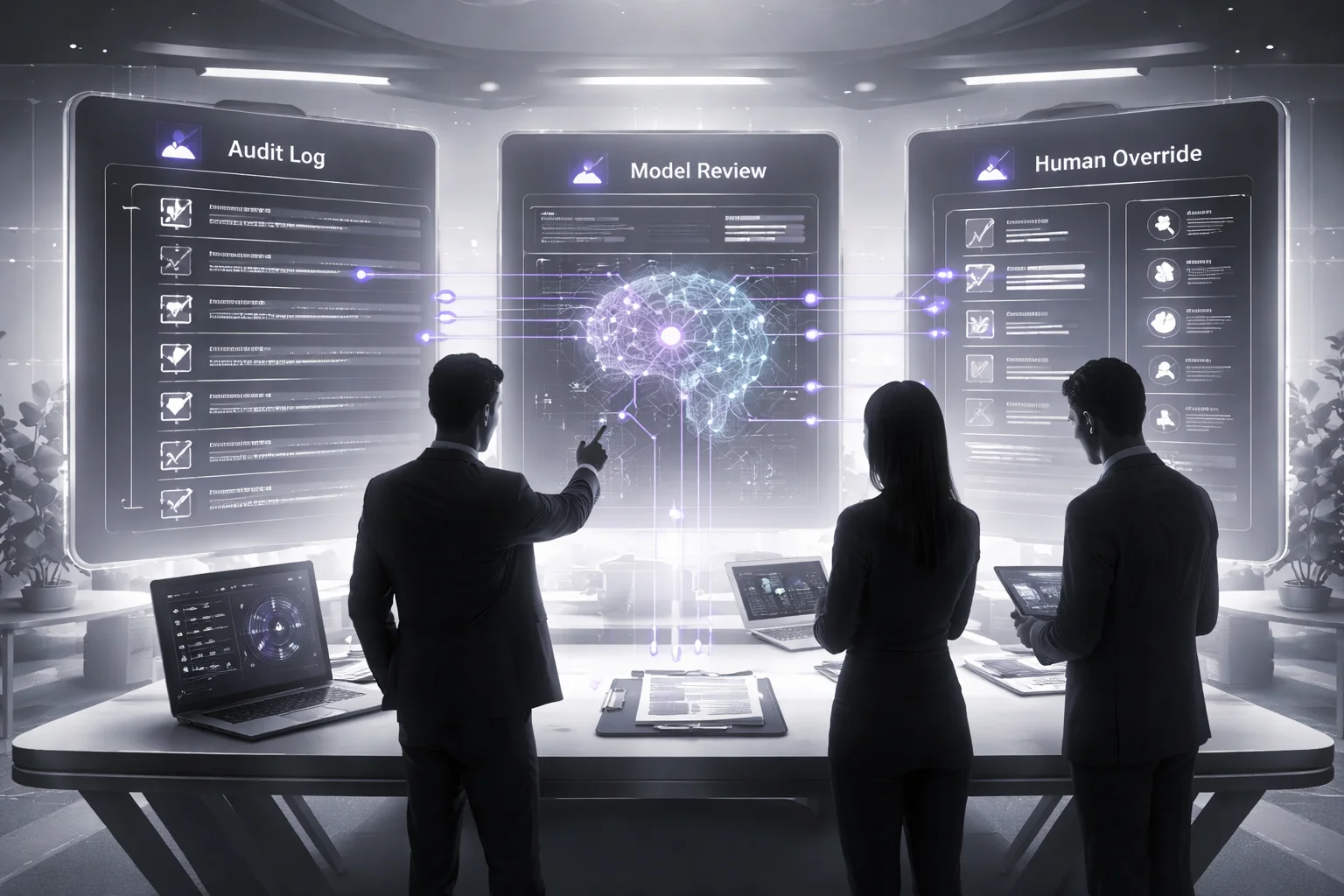
The controls shouldn't be flashy. They should be dull, repeatable, and hard to argue with: immutable audit trails, model review checkpoints before every policy change, human override rules for adverse actions and compliance exceptions, and documentation templates that capture input data, output rationale, reviewer decision, and override reason. That's basic algorithmic auditing. It's also what makes HR compliance automation survivable six months later when employee relations, outside counsel, or a regulator asks for the exact record.
Yes, the productivity upside is real. A field study cited by Applaud HR reported a 15% productivity increase across 5,172 support agents using a generative AI assistant. Fine. Useful. But faster bad decisions are still bad decisions — you just get more of them.
If you're putting these controls into intelligent agent systems from day one, the supervision patterns in Anthropic Claude Sdk are worth studying. Speed is easy to demo; can you explain the decision after the fact?
Data, Privacy, and Security Requirements for HR AI
What actually breaks first when an HR AI agent goes live?
Most teams guess wrong. They picture the flashy failure: a weird chatbot answer, a biased screening summary, a public screenshot on LinkedIn by 4:17 p.m. after somebody in recruiting asks the bot something it should've never answered. That's the visible stuff. That's what gets screenshotted.
2025 is the year ValueX2 says agent-based work systems stop feeling experimental and start looking like normal operating infrastructure. That's not a fun milestone for HR. I think it should make buyers more suspicious, not less.
I've watched this happen before quarter-end pushes. A team wants an AI agent for HR automation live before reporting closes, someone says untangling permissions will take another two weeks, so they grant broad access "for now," and suddenly the system can read interview notes, touch onboarding records, and wander through employee cases like nobody ever invented boundaries.
Applaud HR spelled out the controls pretty plainly: least-privilege access, read/write separation, approval steps for riskier actions, audit logs, and human handoff when the agent gets stuck. Sounds basic. It isn't. Not once setup speed starts competing with caution.
The answer is permissions. And data flow. And that boring setup meeting where somebody decided who gets access to what.
That's where the real damage starts. A sloppy HR automation AI agent doesn't fail once. It repeats the same bad assumption across recruiting, onboarding, and employee relations at machine speed. Policy PDFs don't stop that. System controls do.
Companies keep making the same lazy trade because week-one velocity feels great. Then an AI recruiting assistant reads notes it shouldn't have touched, or an onboarding AI agent updates records before any human verifies them, and everybody acts stunned even though blanket permissions were approved on day one.
Your baseline can't be loose enough for six different stakeholders to "interpret" it six different ways.
- Consent management: write down exactly what data you're collecting, why you're collecting it, and where consent applies—especially in candidate screening flows and onboarding paperwork.
- Retention limits: set deletion rules by workflow. Candidate data can't sit forever just because storage is cheap.
- Role-based access control: use RBAC so each agent only touches what's needed for that task. Read access for policy lookup isn't write access for employee records.
- PII minimization: keep sensitive fields out of prompts and memory unless the task truly needs them.
- Vendor review: inspect subprocessors, logging practices, model hosting, encryption, incident response plans, and whether you can actually review audit trails.
But even that's not the whole story.
The guardrails change depending on where the agent sits. In recruitment, permissions need to tie back to job-related criteria and support fairness and bias mitigation. In onboarding, identity verification should stay separate from general task orchestration. In employee relations, case visibility needs to be locked down hard because sensitive complaints have no business drifting across broad HR workflow automation.
This is the part buyers lose in the middle of the sales process: more autonomy means more control work, not less. If you're buying into 2025-style agent systems, you're also buying tighter approval chains, stronger boundaries around what intelligent agents can do, and regular algorithmic auditing. I'd argue that's not optional anymore.
If you're working through architecture options for that control layer, this breakdown of Anthropic Claude Sdk is a solid place to start.
The weird part? Good security usually makes HR faster. People stop hesitating once they know exactly what the system can see, what it can change, and what it forgets on purpose. So if another agent is about to land in recruiting or onboarding next quarter, are your controls actually inside the product—or still sitting in a PDF legal approved months ago?
Change Management: How to Roll Out HR Agents Safely
41 days became 29. Twelve days gone in 10 weeks. I always pause at numbers like that, because they sound like vendor-slide nonsense right up until you see what actually changed.

In this case, it was a mid-sized company using an AI recruiting assistant for screening support and adding HR workflow automation for onboarding reminders. Not magic. Not some giant transformation budget. Just a tighter process around two narrow jobs.
Here's where people get fooled. They see the 41-to-29-day drop in time-to-hire and assume the win came from a better model or a sharper integration team. I don't buy that. Most rollouts fail for much duller reasons, and much more human ones.
HR starts wondering whether the system is quietly grading their judgment. Hiring managers treat it like another layer between them and a filled req. Candidates notice the weirdness first — stiff messages, awkward handoffs, that slightly robotic tone that makes the process feel colder before anyone internally admits something's off.
I've seen polished demos fall apart in real use. Recruiters kept their private spreadsheets anyway. Managers ignored prompts. Onboarding completion stalled because nobody trusted the new flow enough to stop working around it. One team I watched burned well into six figures on workflow changes and was back in a coordinator's color-coded Excel file by the second week. That's not a software problem. That's rollout malpractice.
Auxis has the right instinct here: start with small pilots, teach people how the system works, and build governance into the process from day one. Small doesn't mean sloppy, though. It can't be "let's try a few things and circle back." That's how you end up in a Tuesday steering meeting with three versions of the truth and nobody owning any of them.
I'd start narrower than most teams want to. One workflow. That's it. Interview scheduling plus recruiter pre-screen summaries is enough. An onboarding AI agent limited to document reminders and task coordination is enough too. The borders matter more than ambition early on.
- Pilot design: document what the agent can do, what needs approval, and what it must never touch.
- Training: show HR staff how recommendations are produced, where fairness and bias mitigation checks happen, and how to override the system safely.
- Stakeholder alignment: get HR, legal, IT, and department managers to agree on one escalation map.
- Escalation playbooks: if confidence drops, policy conflicts appear, or candidate complaints come in, route it to humans fast and keep audit trails.
- KPI tracking: measure time-to-hire, recruiter hours saved, onboarding completion rate by day 7 or day 14, exception volume, and results from bias testing for HR AI.
The company that got from 41 days to 29 didn't trust the system blindly. For three weeks, every recommendation was reviewed by humans. They ran basic algorithmic auditing. They used weekly manager feedback to clean up noisy prompts before expanding scope. That's the part people skip because it's boring, and it's also the part that worked.
The payoff wasn't just faster hiring. Onboarding completion by day 7 went from 68% to 91%. That happened because they treated the pilot like an operating procedure instead of a product demo.
If you're building that control layer now, this breakdown of Anthropic Claude Sdk is worth a look.
I think "trust the automation" is the wrong goal anyway. People don't need faith. They need visibility. They need to see what the agent did, why it did it, where it stops, and who steps in when it gets messy.
Start smaller than feels exciting. Be stricter than feels comfortable. Put rules in writing. Build fast escalation paths. Watch outcomes closely enough that nobody has to guess whether the system is helping or quietly making things worse. If your team can't see what an AI agent for HR automation is doing inside hiring and onboarding, why would they hand it the keys?
FAQ: AI Agent for HR Automation
What is an AI agent for HR automation?
An AI agent for HR automation is software that doesn't just answer questions or trigger one rule. It can read context, decide the next step, and carry out multi-step HR workflow automation across systems like your ATS, HRIS, ticketing tools, and document platforms. Think of it as an operator with guardrails, not just a chatbot with better manners.
How does an AI agent improve recruiting and onboarding?
A good HR automation AI agent takes care of repetitive work like resume intake, interview scheduling, candidate follow-ups, document collection, and onboarding checklists. According to Juicebox, AI can automate about 80% of recruiter time spent on manual top-of-funnel tasks in 2026. That gives your team more time for actual judgment, candidate experience, and hiring manager alignment.
What are the safest HR automation use cases for AI agents?
The safest starting points are low-risk, high-volume tasks: HR help desk requests, onboarding status updates, policy Q&A, payroll validation checks, compliance documentation, and internal workflow coordination. These use cases benefit from intelligent agent systems without putting the final hiring or disciplinary decision in the model's hands. Start there, prove reliability, then expand carefully.
Can AI agents be used for employee screening and hiring decisions?
Yes, but this is where teams get sloppy and regret it later. An AI recruiting assistant can support screening by summarizing applications, flagging missing information, or ranking based on clearly defined job criteria, but humans should still own final decisions. If your system starts acting like a black box judge, you've already gone too far.
Why do HR automation projects fail without fairness and compliance controls?
Because speed without controls just helps you make bad decisions faster. In HR, fairness and bias mitigation aren't optional, especially when your workflows touch hiring, pay, promotions, or terminations. If you skip bias testing for HR AI, EEOC guidelines, GDPR compliance, or algorithmic auditing, you're not building efficiency, you're building legal exposure with better UX.
Does HR AI require bias testing and audit controls?
Yes, every time the system influences people decisions in a meaningful way. You need bias testing for HR AI across protected groups, plus audit trails that show what data the model used, what recommendation it made, who approved it, and what happened next. That's the difference between a controlled system and a very expensive shrug.
How should bias testing be performed for AI recruiting agents?
Test before launch and on a schedule after launch using real hiring workflows, not toy datasets that make everyone feel smart for a week. Compare outcomes across demographic groups, review false positives and false negatives, document fairness thresholds, and run algorithmic auditing whenever job requirements, models, or training data change. It's kind of like trying to calibrate a scale while people are already standing on it, which isn't a perfect analogy, but you get the problem.
What audit controls and monitoring should be implemented for HR AI decisions?
Use audit trails, approval logs, exception reporting, and model governance records from day one. High-stakes actions should require human approval, read and write permissions should be separated, and failed tasks should trigger human handoff instead of silent retries. According to Applaud HR, least-privilege access, approval for higher-stakes actions, and audit logs are core safety controls for HR agents in 2026.
How do you ensure data privacy and security for HR AI agents?
Start with privacy by design, data minimization, consent management, and role-based access control (RBAC). Then add encryption at rest and in transit, strict retention rules, vendor reviews, and clear boundaries on what employee data the agent can read, store, or send to other systems. If your AI agent has broad access because it's "easier that way," that's not architecture, that's wishful thinking.
What change management steps are needed to roll out HR agents safely?
Run a small pilot first, train HR staff on where the agent helps and where humans must step in, and define escalation paths before launch. According to Auxis, AI success in HR depends on small pilots, AI literacy, and embedded governance. Rollout works better when you treat it like an operating change, not a software install.
How do you design an approval workflow for AI-assisted recruiting and onboarding?
Let the agent prepare recommendations, collect documents, and move routine steps forward, but require human approval for anything that changes candidate status, compensation, start dates, or compliance outcomes. Keep approvals role-based, time-stamped, and easy to review later. The best workflow isn't the one with the fewest clicks, it's the one you can defend six months later in an audit.